
Rose pruning: general tips
These general tips for rose pruning will help you improve the health and lifespan of any rose.
Common name - Rose leafhopper
Scientific name - Edwardsiana rosae
Plants affected - Wild and cultivated roses as well as various other rosaceous trees and shrubs such as hawthorn and rowan
Main symptom - Pale mottling on foliage
Most active - May-September

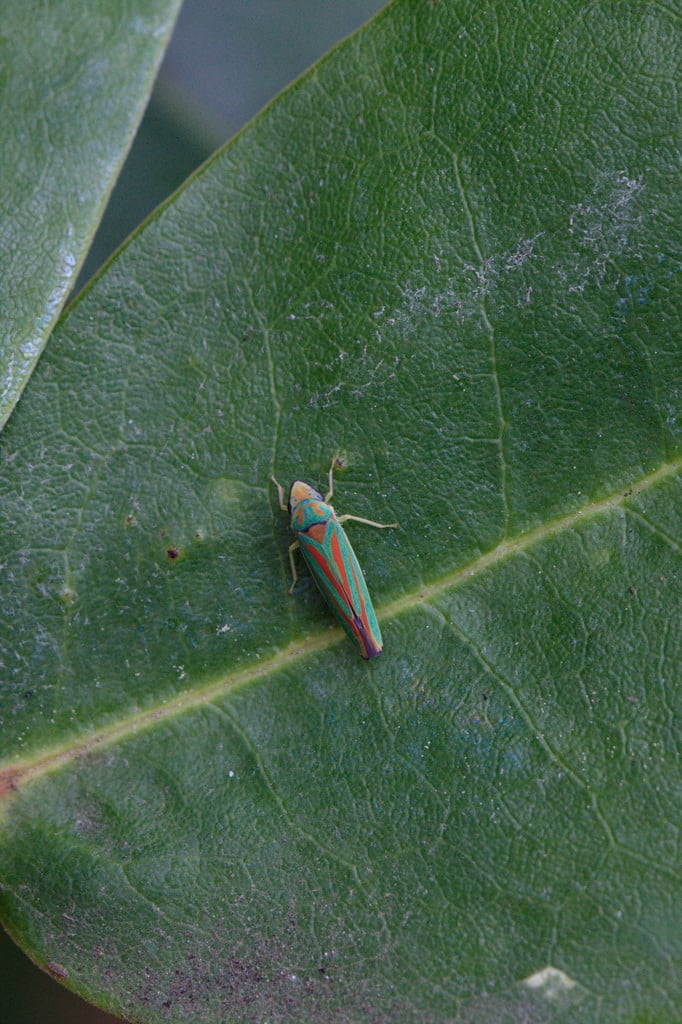
The leafhoppers are a family (Cicadellidae) of sucking true bugs, there are more than 180 species found in Britain. They can jump or fly short distances and most do not feed on or cause noticeable damage to garden plants. Find out more about British species from .
Rose leafhopper feeds on the leaves of roses and some other rosaceous trees and shrubs such as hawthorn and rowan. They readily jump away if disturbed and can cause a mottling on leaves of affected plants, especially those in hot dry situations. They are seldom noticed on any plants but roses in Britain and often do not affect the vigour of garden plants.
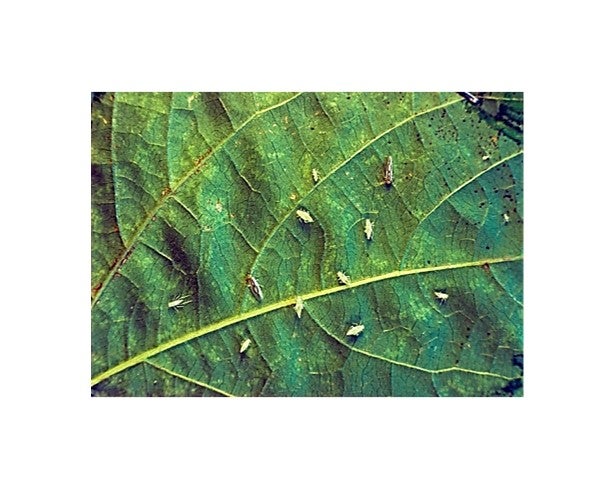
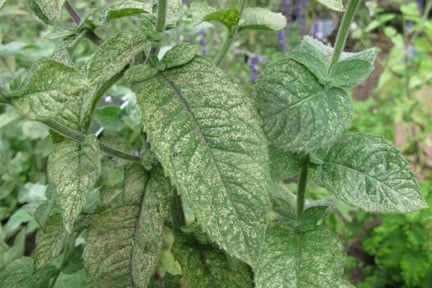
Pale, coarse, mottling is seen on the upper leaf surface of roses. Over time, the mottled area can expand leaving foliage looking blanched. Occasionally populations can be large and cause leaves to turn brown and fall prematurely, although this is unusual.

Mottling caused by rose leafhopper (Edwardsiana rosae)
Rose leafhopper can be considered part of the roses in gardens support; although the mottling can be very noticeable roses are often able to withstand large leafhopper populations.
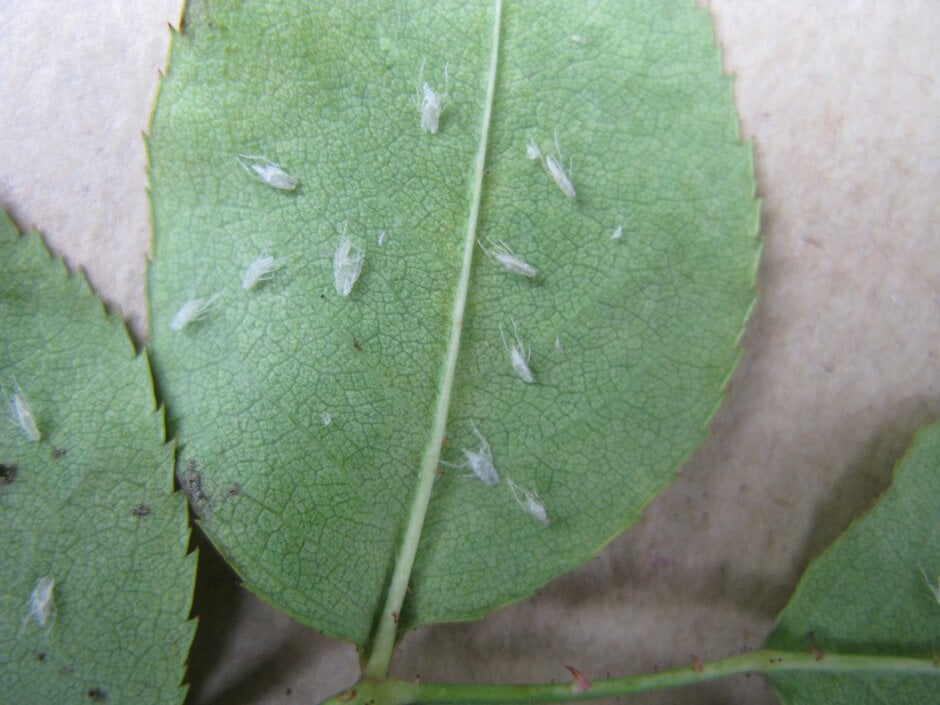
The pale yellow adult rose leafhoppers are 3.5-4 mm long and sit with their wings folded back over their bodies. When disturbed, the adults readily jump and fly short distances. The leafhoppers overwinter as eggs inserted in the leaves and young shoots which hatch in May. The creamy white immature stages, known as nymphs, then begin to feed on the lower leaf surface. They reach the adult stage in July and lay eggs which hatch to produce a second generation. Overwintering eggs are laid in the autumn but in mild areas the adults may live until late winter.