When to plant out tender plants – avoiding late frosts
RHS Advice Guide
It’s tempting to plant out tomatoes, pelargoniums and other tender vegetables and bedding on the first sunny days of spring, but late frosts and cool nights can still damage them. Use the guide below to work out the safe planting time in your garden and learn how to protect plants if an unexpected chill is forecast.
By The RHS Advice Team
Quick facts
Night‑time temperatures should be above 7 °C before planting out
1
Some plants, such as tomatoes, grow better when the nights are above 10 °C
2
UK location and garden microclimate determine planting out dates
3
Climate change has reduced frost days, but late spring frosts still occur
Tender and half-hardy plants are damaged or killed by frost. RHS hardiness ratings provide an overview of plant hardiness, indicating the lowest temperature range a plant is likely to withstand.
H2 plants are considered tender, tolerating temperatures as low as 1 to 5 °C, but won’t survive freezing
H3 plants are half-hardy, tolerating temperatures as low as −5 to 1 °C. They may be hardy in coastal, mild or sheltered areas, but are at risk from early frosts
In practice, both tender and half-hardy plants are planted out after frost risk has passed and once nights are reliably mild, so above at least 7 °C.
USDA hardiness zones don’t translate well to the UK; they classify only by average minimum winter temperature. In the UK’s maritime climate, winter wet, wind, summer cool and microclimates also limit survival; hence the UK-specific RHS H1a–H7 hardiness ratings.
When can tender plants go outside?
Use this rule of thumb guide to when to plant out in your area, then confirm with your 5–10-day weather forecast and your garden’s microclimate:
1. Timings by UK area
These timings reflect the typical first safe planting time in an average year. The pattern moves from earlier in the south-west to later in northern uplands.
South-west tip and along the south coast of England: first to second half of May
Southern England and south Wales: second half of May
Midlands, north-west England, Yorkshire and north Wales: end of May
North-east England, southern Scotland and Northern Ireland: early June
The Highlands and northern Scotland: mid June
2. Adjust timing for your microclimate
Sheltered by walls, fences or hedges, or in urban areas or coastal spots (e.g. city centres, Anglesey, coastal Ayrshire): you may be 1–2 weeks earlier
Frost pockets/valley bottoms (e.g. Welsh borders, Vale of Worcester): plant later or avoid planting in the lowest, coldest areas of your garden
3. Harden off before planting
Hardening off takes 2–3 weeks, gradually acclimatising plants raised indoors or in a heated greenhouse to outdoor light, wind and cooler nights. Place in a sheltered, dappled sunny spot, increasing time outdoors in the daytime (bring in at night). This is essential for tender summer plants such as dahlias in pots, coleus, salvias, tomatoes, basil, peppers and French beans.
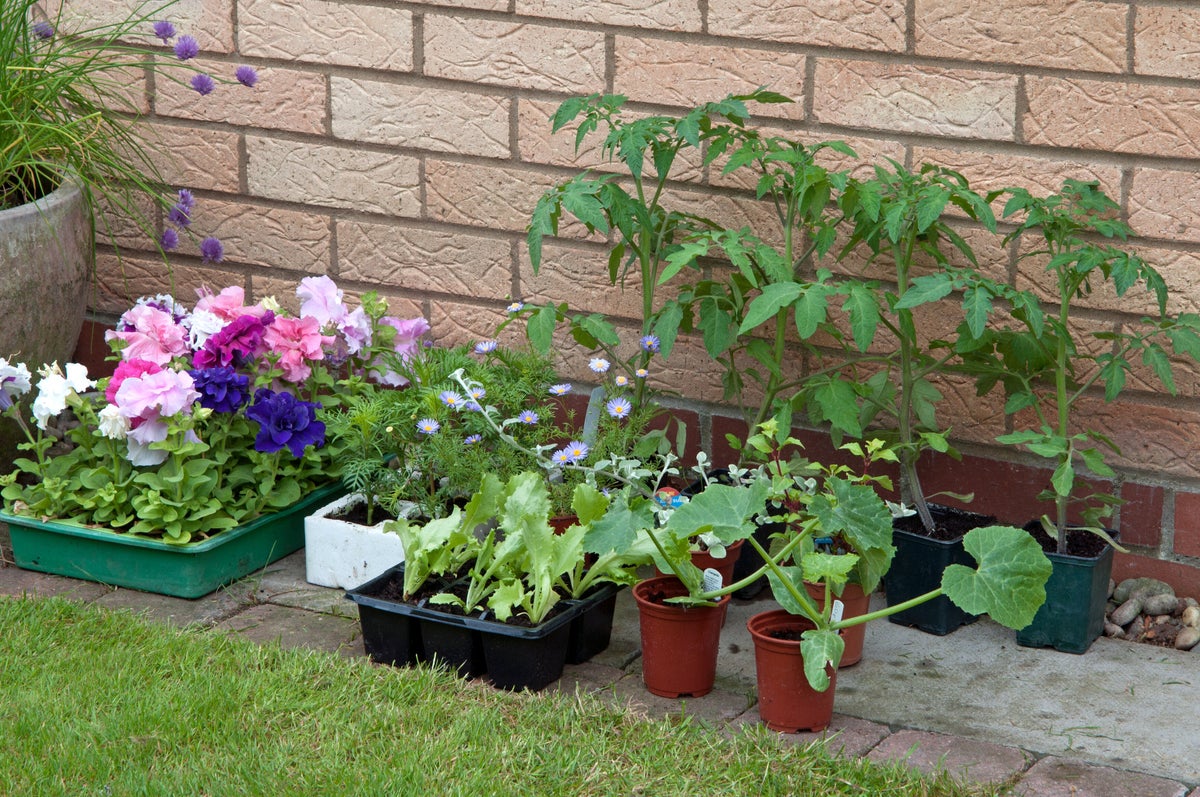
Young tomato plants are sensitive to low temperatures
4. Check temperatures and forecasts before planting
After , plant out when nights are consistently above 7 °C. Some common heat‑loving edibles, including tomatoes, peppers, basil and cucurbits, do better if nights are above 10 °C. This avoids the risk of chilling injury that often affects tender and half-hardy plants at lower single-digit temperatures.
5. Be ready to protect
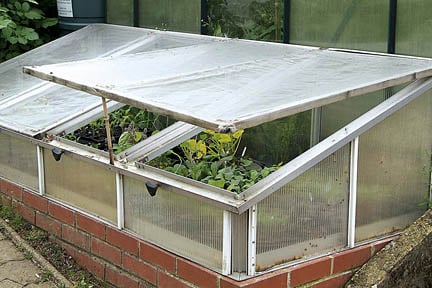
If an unexpected chill is forecast, cover with reused or . Use a double layer on the coldest nights.
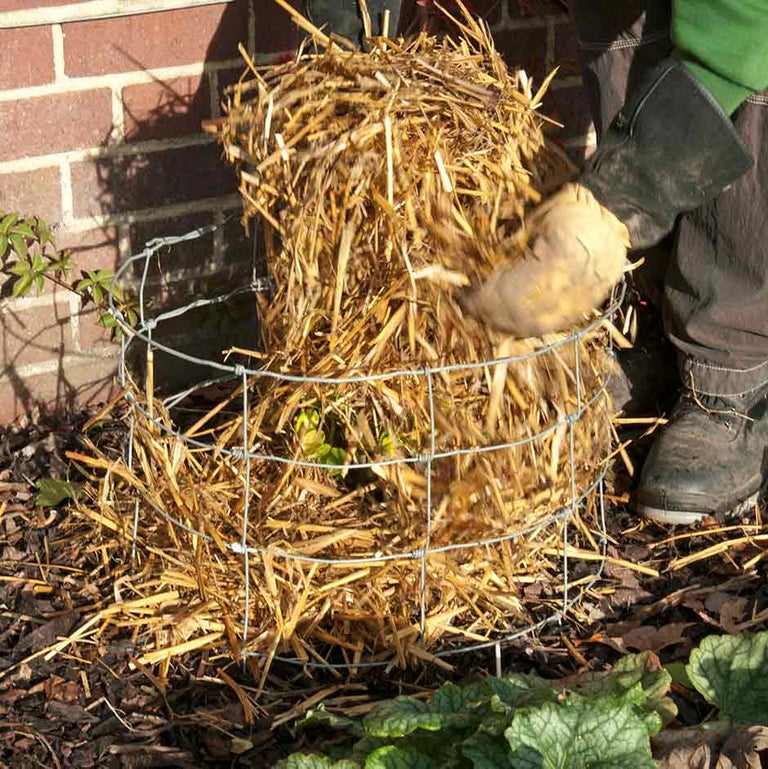
Protect plants at night if low temperatures are forecast
Tips for planting out
Bedding and baskets: don’t be swayed by shop displays or garden centres selling and young early in spring. Follow the timings above, harden off thoroughly, and have reused or to hand.
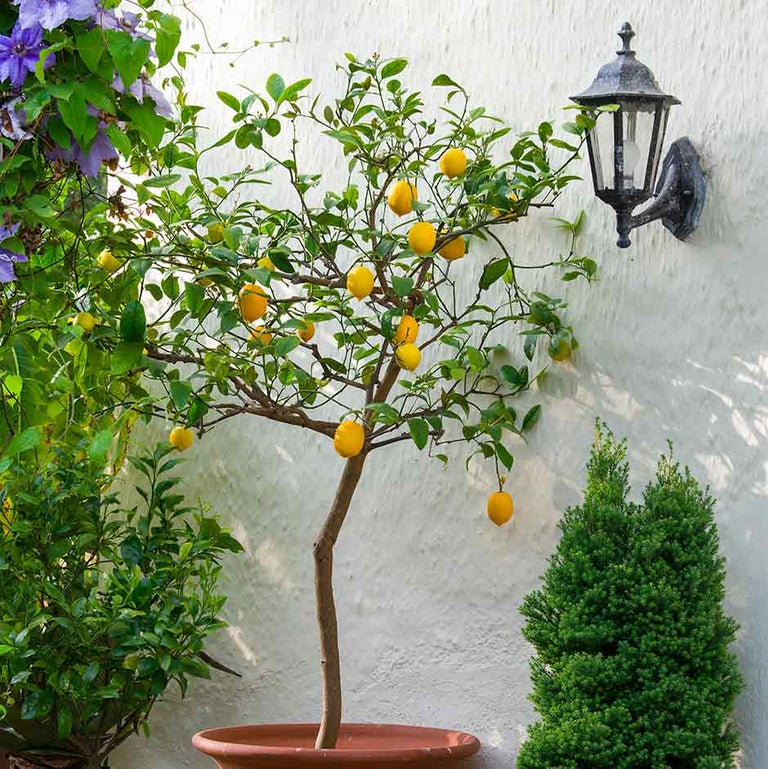
Larger container plants (e.g. citrus, tender houseplants): introduce to strong sunshine gradually, starting in dappled shade; bring under cover on cool nights until temperatures are stable.
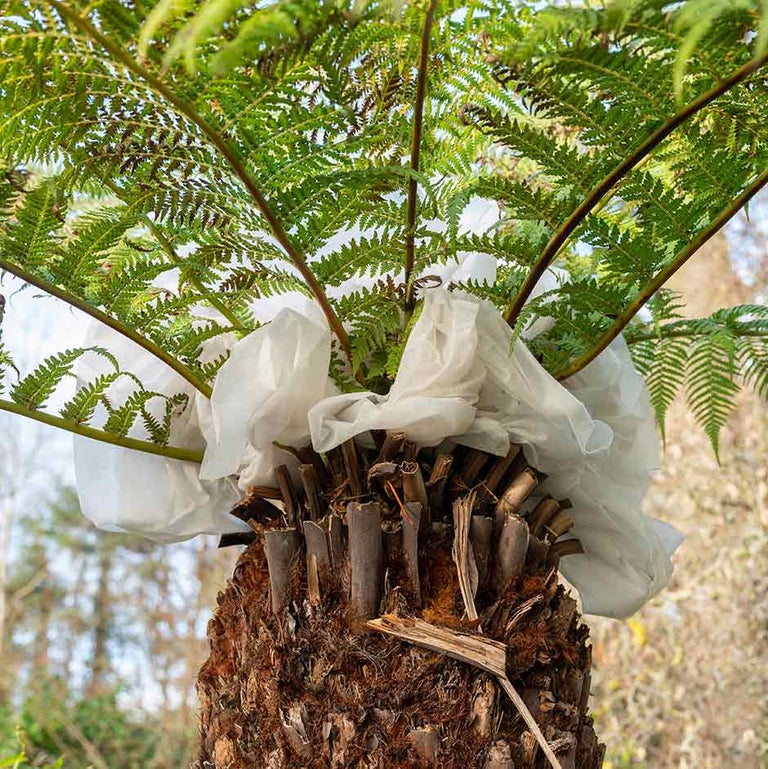
Tree ferns and Japanese bananas: these are fairly hardy plants (RHS Hardiness Ratings: H3 and H2) so their winter wraps (fleece/hessian) are removed sooner – generally late April or early May in many areas, later in colder/northern locations. See our guides to growing tree ferns and bananas for more information.
What do we mean by “last frost” — and why does it matter?
The term ‘last frost’ date is often used interchangeably for when to plant out. In fact, the timings of these two events are quite different, and here’s why:
Last spring ‘air frost’ is the final night near or below 0 °C, which can scorch or kill tender growth through freezing. This typically occurs two to four weeks before it is safe to plant out.
‘Ground frost’ is still common after the last air frost. It occurs when the nights dip between 1 to 4 °C. Ground frost is a curious phenomenon: on clear calm nights, leaves and soil lose heat to the sky and can become colder than the air above them. In the early morning, you may see a light icy layer of frost on the grass – which gives rise to the alternative name – ‘grass frost’. It can sometimes kill tender and half-hardy plants, but will often cause them to grow slowly and poorly for many weeks.
Plant out once the nights are consistently forecast to be above at least 7 °C. Waiting until the temperatures are milder helps tender plants grow away well, rather than stalling. This is the basis for the dates given in the When can tender plants go outside? section above.
Don’t forget: harden off your tender plants to acclimatise them to outdoor conditions for maximum success.
Did you know?
UK frost days have declined in recent decades, but spring is variable and late frosts still occur – April 2021 recorded the most April air frosts in at least 60 years. So, while the trend is warming, planting dates haven’t shifted enough to plant out earlier.