91µ¼º½

Osmanthus delavayi

RHS Plant Profile
Delavay osmanthus
Delavay osmanthus RHS 1999
Award of Garden Merit
Shrubs

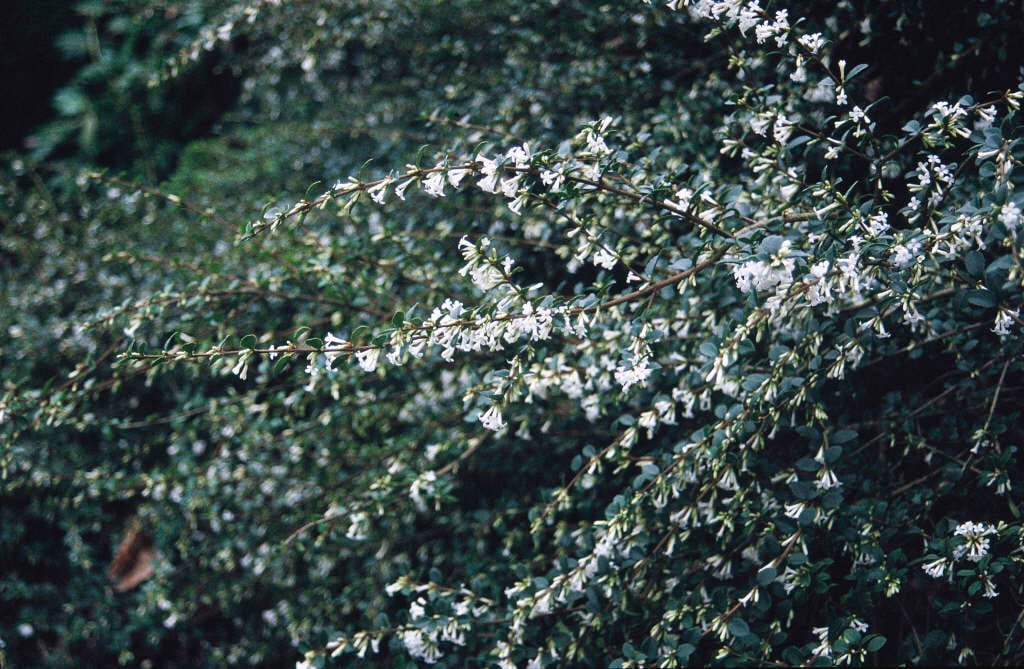
A dense, rather slow-growing medium-sized evergreen shrub with rounded or ovate, dark green leaves to 2.5cm in length. Abundant small, highly-scented white flowers in clusters are followed by small, blue-black berries

Position

Full sun, Partial shade

Soil Types

Chalk, Clay, Loam, Sand

Max Height

2.5-4 metres

Max Spread

2.5-4 metres

Size

Time to Maturity
10–20 years
Max Spread
2.5-4 metres
Max Height
2.5-4 metres

Growing Conditions

Chalk Clay Loam Sand
Moisture
°Â±ð±ô±ô–d°ù²¹¾±²Ô±ð»å
pH
Acid or Alkaline or Neutral

Position

Full sun Partial shade
Aspect
South–facing or West–facing or North–facing or East–facing
Exposure
Exposed or Sheltered
Hardiness
H5

Colour & Scent

Fragrance Flower
Season Stem Flower Foliage Fruit
Spring
Summer
Autumn
Winter

Botanical Details

Family
Oleaceae
Native to GB/Ireland
No
Foliage
Evergreen
Habit
Bushy
Genus
Osmanthus can be evergreen shrubs or small trees with leathery, opposite leaves and small, usually fragrant, tubular white, yellow or orange flowers with 4 lobes, followed by ovoid blue-black fruits
Name Status
Correct
Plant Range
SW China

How to Grow

Cultivation

Grow in well-drained soil in sun or partial shade; good for woodland gardens

Propagation

Propagate by seed or semi-hardwood cuttings

Suggested planting locations and garden types

  • Coastal
  • Low Maintenance
  • Banks and slopes
  • Hedging and screens

Pruning

Pruning group 8

Pests

Generally pest-free

Diseases

May be susceptible to honey fungus