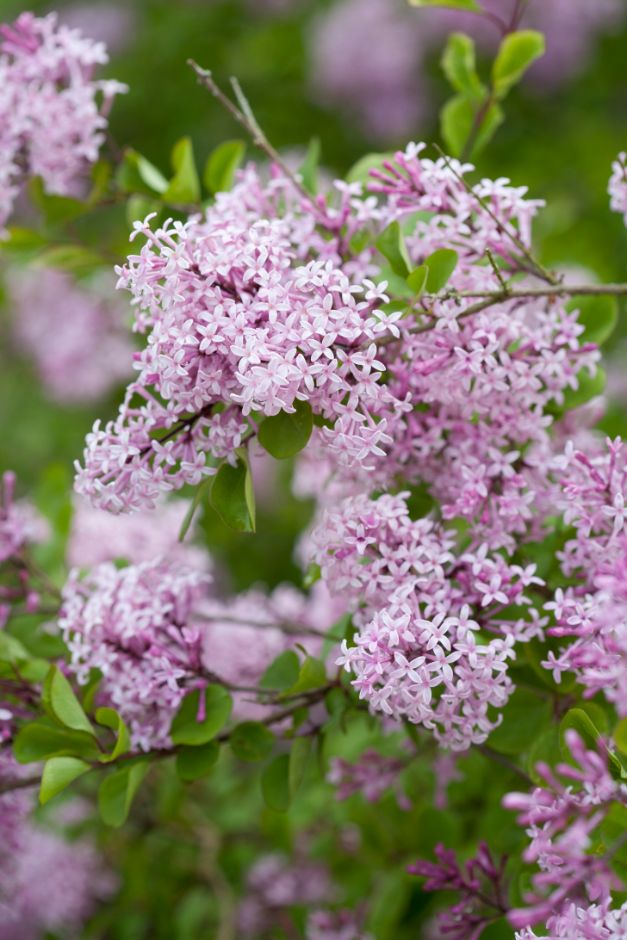
Syringa 'Red Pixie'
lilac 'Red Pixie'
A compact, bushy shrub, to 1.5m tall, with spreading branches and small, mid-green leaves that turn yellow in autumn. In late spring, and often again in late summer or early autumn, dense sprays of tubular, sweetly-scented flowers open deep pink from red buds, then fade to pale pink

Buy this plant
Size
Ultimate height
1–1.5 metresTime to ultimate height
5–10 yearsUltimate spread
1–1.5 metresGrowing conditions
Moisture
Moist but well–drained, °Â±ð±ô±ô–d°ù²¹¾±²Ô±ð»åpH
Alkaline, NeutralColour & scent
| Stem | Flower | Foliage | Fruit | |
| Spring | Pink | Green | ||
|---|---|---|---|---|
| Summer | Pink | Green | ||
| Autumn | Pink | Yellow | ||
| Winter |
Position
- Full sun
Aspect
West–facing or ³§´Ç³Ü³Ù³ó–f²¹³¦¾±²Ô²µ
Exposure
Exposed or Sheltered Hardiness
H6Botanical details
- Family
- Oleaceae
- Native to GB / Ireland
- No
- Foliage
- Deciduous
- Habit
- Bushy
- Genus
Syringa can be deciduous shrubs or trees, with simple, entire or rarely pinnate leaves and conical panicles of small, very fragrant, 4-lobed tubular flowers in late spring or early summer
- Name status
Accepted
How to grow
Cultivation
Grow in well-drained, fertile, humus-rich alkaline to neutral soil in full sun
Propagation
Suggested planting locations and garden types
- Cottage and informal garden
- Patio and container plants
- City and courtyard gardens
- Low Maintenance
- Flower borders and beds
Pruning
Pests
May be susceptible to lilac leaf-mining moth, willow scale and thrips
Diseases
May be susceptible to lilac blight, honey fungus, phytophthora, powdery mildews and bacterial canker (Pseudomonas Syringae)
Syringa 'Red Pixie'
lilac 'Red Pixie'
Get involved
91µ¼º½ is the UK’s leading gardening charity. We aim to enrich everyone’s life through plants, and make the UK a greener and more beautiful place.