91µ¼º½

Campanula thyrsoides

RHS Plant Profile
yellow bellflower
yellow bellflower RHS

Other common names

thyrsoid bellflower

Plants for pollinators
Herbaceous Perennial Annual Biennial

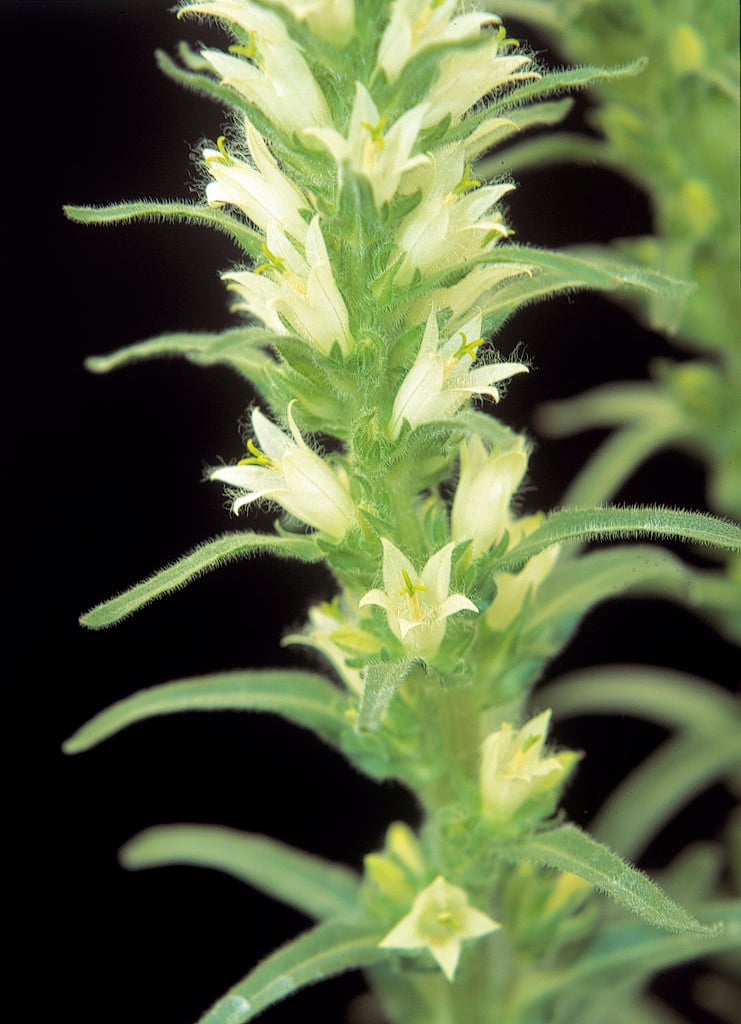
An upright biennial or short-lived perennial to around 50cm tall with a rosette of narrow, stiffly hairy, lance-shaped leaves to 12cm long. Unbranched, bristly and leafy stems develop in summer and bear a dense, fat spike of creamy-yellow, slightly fragrant, tubular flowers up to 2.5cm long

Position

Full sun, Partial shade

Soil Types

Chalk, Loam, Sand

Max Height

0.5-1 metres

Max Spread

0.1-0.5 metres

Size

Time to Maturity
1–2 years
Max Spread
0.1-0.5 metres
Max Height
0.5-1 metres

Growing Conditions

Chalk Loam Sand
Moisture
°Â±ð±ô±ô–d°ù²¹¾±²Ô±ð»å
pH
Acid or Alkaline or Neutral

Position

Full sun Partial shade
Aspect
South–facing or North–facing or East–facing or West–facing
Exposure
Exposed or Sheltered
Hardiness
H5

Colour & Scent

Fragrance Flower
Season Stem Flower Foliage Fruit
Spring
Summer
Autumn
Winter

Botanical Details

Family
Campanulaceae
Native to GB/Ireland
No
Foliage
Deciduous
Habit
Columnar upright
Genus
Campanula may be annuals, herbaceous or evergreen perennials, with bell or star-shaped, often blue, flowers in late spring or summer
Name Status
Correct
Plant Range
European Alps

How to Grow

Cultivation

Grows best in a well-drained soil in full sun

Propagation

Propagate by seed

Suggested planting locations and garden types

  • Cottage and informal garden
  • Gravel garden
  • Rock garden
  • City and courtyard gardens
  • Wildlife gardens

Pruning

No pruning required

Pests

Generally pest-free

Diseases

Generally disease-free but may be susceptible to rust, powdery mildews and a leaf spot