Not the plant you're looking for? Search over 300,000 plants
Annual BiennialHerbs - Culinary

Size
Ultimate height
0.5–1 metresTime to ultimate height
1–2 yearsUltimate spread
0.1–0.5 metresGrowing conditions
Chalk
Clay
Loam
Sand
Moisture
°Â±ð±ô±ô–d°ù²¹¾±²Ô±ð»åpH
Acid, Alkaline, NeutralColour & scent
| Stem | Flower | Foliage | Fruit | |
| Spring | Green | |||
|---|---|---|---|---|
| Summer | Blue | Green | ||
| Autumn | ||||
| Winter |
Position
- Full sun
- Partial shade
Aspect
South–facing or West–facing or ·¡²¹²õ³Ù–f²¹³¦¾±²Ô²µ
Exposure
Exposed or Sheltered Hardiness
H5Botanical details
- Family
- Boraginaceae
- Native to GB / Ireland
- No
- Foliage
- Deciduous
- Habit
- Spreading branched
- Genus
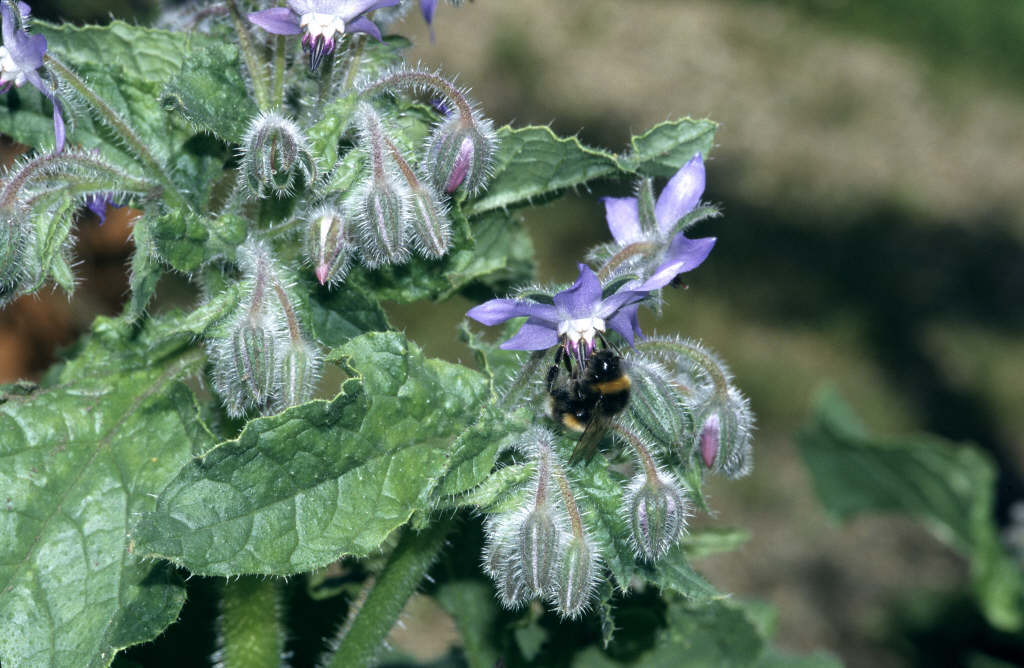
Borago can be annuals or perennials, with coarsely hairy stems and simple leaves, with branched cymes of blue flowers
- Name status
Correct
- Plant range
- Europe
How to grow
Cultivation
Easy to grow in any reasonably drained soil in sun or partial shade. Dislikes transplanting
Propagation
Propagate by seed
Suggested planting locations and garden types
- Cottage and informal garden
- Wildlife gardens
- Wildflower meadow
- Flower borders and beds
Pruning
Leave to self-seed after flowering
Pests
Foliage may be damaged by slugs and leaf-mining flies
Diseases
May be susceptible to powdery mildews

Borago officinalis
borage
at the RHS plant Shop
Get involved
The RHS is the UK’s gardening charity, helping people and plants to grow - nurturing a healthier, happier world, one person and one plant at a time.