Pyrus communis 'Beurré Superfin' (D)

pear 'Beurré Superfin'
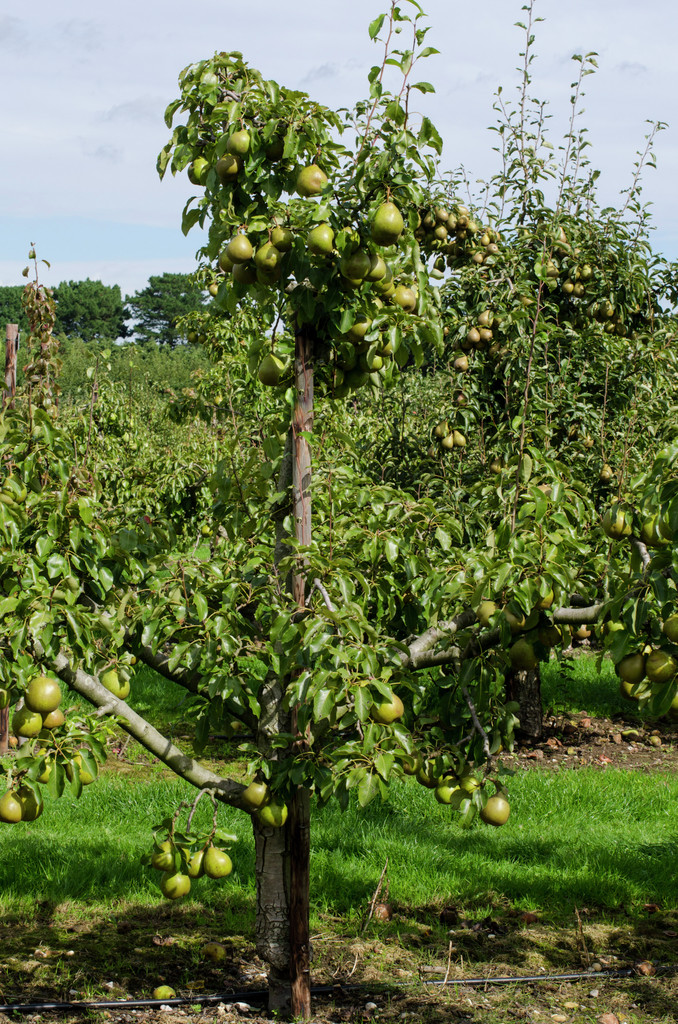
A cultivar with a fine, melting, scented flesh with slightly rough, russetted, pale green and yellow skin. A high quality pear that needs a warm, sheltered site. Pollination group 3. Season of use late September and October
Size
Ultimate height
4–8 metresTime to ultimate height
10–20 yearsUltimate spread
4–8 metresGrowing conditions
Moisture
Moist but well–drained, °Â±ð±ô±ô–d°ù²¹¾±²Ô±ð»åpH
Acid, NeutralColour & scent
| Stem | Flower | Foliage | Fruit | |
| Spring | White | Green | ||
|---|---|---|---|---|
| Summer | Green | |||
| Autumn | Green | Brown Green Yellow | ||
| Winter |
Position
- Full sun
Aspect
South–facing or °Â±ð²õ³Ù–f²¹³¦¾±²Ô²µ
Exposure
Sheltered Hardiness
H6Botanical details
- Family
- Rosaceae
- Native to GB / Ireland
- No
- Foliage
- Deciduous
- Habit
- Bushy
- Genus
Pyrus are deciduous trees or shrubs with oval leaves and scented white flowers in spring, followed by green or brown fruits, edible in some species
- Name status
Unresolved
- Horticultural Group
- Dessert pears are sweet and juicy and are best eaten picked fresh and raw
How to grow
Cultivation
Needs a deep, fertile, moist but well-drained, fairly neutral soil in a sheltered, sunny position. Will not thrive on very acid soils, shallow chalk soils or with shade for more than half the day. See Pears or pear cultivation for further advice
Propagation
Propagate by grafting or budding onto a rootstock for fruit. Quince rootstocks are usually used
Suggested planting locations and garden types
- Cottage and informal garden
- City and courtyard gardens
- Wildlife gardens
- Wall side borders
- Edible fruit
Pruning
Regular pruning required; a spur bearer. Prune according to form: cordons, espaliers and pruning established fans. Can also be grown as standards or spindlebushes. For further guidance see: pruning new pear trees, summer pear pruning, winter pear pruning, renovating pear trees
Pests
May be susceptible to aphids, caterpillars, codling moth, pear blister mite, pear midge and pear and cherry slugworm
Diseases
May be susceptible to blossom wilt, brown rot, fireblight, pear scab, European pear rust and honey fungus (rarely)
Get involved
The RHS is the UK’s gardening charity, helping people and plants to grow - nurturing a healthier, happier world, one person and one plant at a time.