Quick Facts
Easy to grow evergreen shrub (does not loose leaves in winter)
1
Grows well in partial or heavy shade; also in a sunny spot
2
Tolerant of most soil types
3
Dislikes soils waterlogged soils
4
Suitable for milder coastal areas
5
Good for hedging in shade
6
Female plants need a male pollinator to produce berries
7


Before you get started
Choosingthe rightaucuba for you
If you are looking for a medium-size, hardy, evergreen shrub for difficult shady and dry spots, Aucuba is one of the best plants to consider. However, it will also grow in sunny spot and on most soils, making a very versatile shrub. It can be also grown in large containers.
Did you know
Ingestion of any part may cause mild gastrointestinal upset.
Leaf colour, flowers and berries
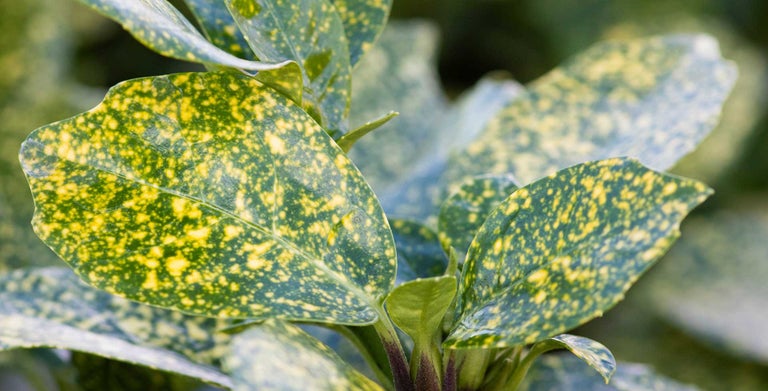
Many cultivars have yellow spotted or blotched leaves adding interest to dark, gloomy borders. If looking for more unusual evergreen shrub, consider Aucuba himalaica var. dolichophylla with its distinct long, narrow, lightly-spotted, willow-like leaves or Aucuba omeiensis with its bold toothed leaves up to 25cm (10in) long.
The spring flowers are insignificant, but on female plant they are followed by bright red berries as long as a male plant is growing nearby to be a . The plant label should indicate if you are buying male or female or when you buy.
Aucuba as hedging
Aucuba responds well to regular pruning, making it also a good choice for hedging in shady spots where other hedging plants would struggle.
Eventual size and shape
If left unpruned, most cultivars will reach around 3m (10ft) high and wide. There are more compact cultivars, such as Aucuba japonica 'Rozannie' and 'Pepperspot', growing to 1.5-2m (5-6â…”ft) tall and wide, making them a good choice for containers.
Buying Aucuba
Aucubasare widely offered for sale all year round as container-grown shrubs from a garden centres, nurseries or hedging plant suppliers.
If looking for more unusual cultivars, try contacting:
Alternatively use our RHS Find a Plant tool for stockists nearby.
Planting
When
Container-grown aucuba can be planted at any time of year, but just avoid planting when the soil is wet or frozen in winter and during dry spells in summer. Planting in spring and autumn is best.
Where
Grow in any soil as long that is not prone to being very wet. They like sun or shade. However, aucuba cultivars with heavy yellow spotting on leaves can suffer from leaf scorch if planted in a very sunny hot, dry position.
Spacing
If growing plant an individual specimen, allow at least 1.5m (5ft) between shrubs. If grown as a hedge, plant 60cm (2ft) apart
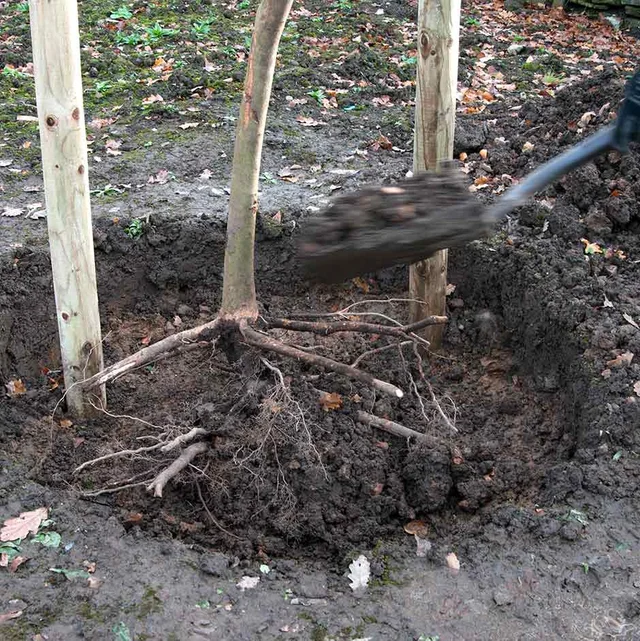
Planting your shrubs: our guide below takes you step-by-step through planting shrubs.
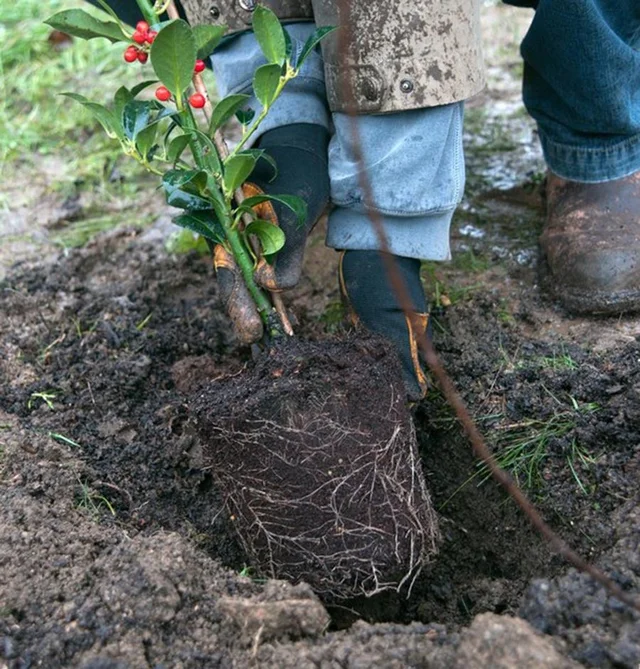
Planting a hedge: follow our guide to hedge planting.
Planting in containers
- Pot up in spring. Use a peat-free multipurpose with added John Innes or a mix of two parts peat-free John Innes No. 3, one part peat-free multipurpose compost and one part grit to improve drainage
- Gradually increase the container size over several years, repotting each spring, aiming for the final size least 45cm (18in) deep and wide
Ongoing Care
Watering
- Though tolerant of dry soils when established, water newly planted Aucuba as needed during the first from spring to summer when rain is lacking
- seldom need watering with the exception of extremely hot and dry summers or if planted in full sun and dry soil
- Mulching with organic matter such as leafmould, garden , manure-based soil conditioner or horticultural will help to retain moisture in the soil and reduce moisture stress
- Mulches and mulching
Feeding
- Regular feeding of established plants is not generally needed
- If plants are not growing well or have developed blackened or scorched leaves, they may benefit from a spring application of a general fertiliser
Plants in containers
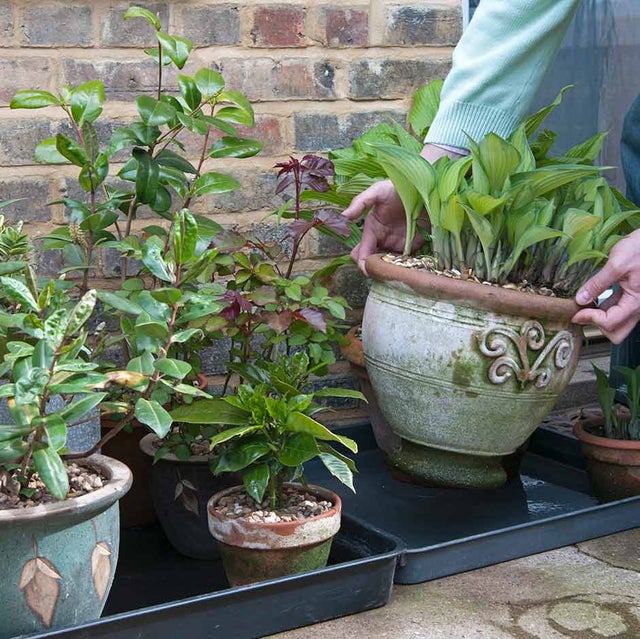
- Container grown Aucuba will need watering like any other containerised plant as the shrubs can not spread their roots in soil to seek water
- Check the growing medium regularly to check if not too dry including during the winter time.
- Feed with general purpose, organic based liquid fertiliser from spring to late summer according to the manufacturers recommendations or incorporate a slow release fertiliser granules into the compost in spring
Pruning and Training
When to prune
- Prune free standing shrubs in spring
- Trim established hedges from mid-spring to late summer
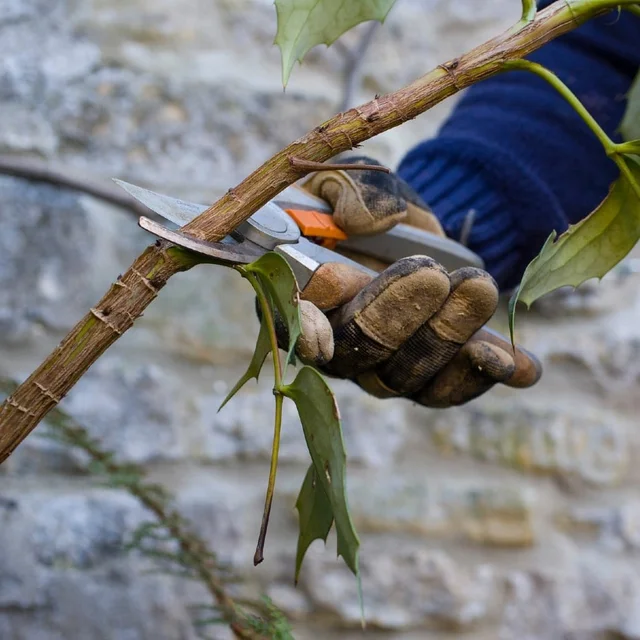
How to prune shrubs
- The first spring after planting cut back the last year's growth by one third to encourage more bushy growth
- On prune back overlong shoots spoiling the shape and cut back any shoots showing signs of dieback, to healthy growth
- If the shrubs become bare at the base or overgrown, renovate in stages over several years by removing one in three of the main stems close to the base each year
How to prune hedges
- On newly planted hedges shorten the last year's growth by one third in spring until established
- Trim mature hedges from md-spring to late summer.
- Renovate in spring
Propagating
Propagating Aucuba
- Aucuba can be easily raised from semi-ripe taken in late summer
- If you like a bit of a challenge, try growing Aucuba from seed. Collect ripe berries and sow them in the autumn in trays or pots of peat-free . Overwinter in a or place pots at the base of a house wall. can take up to 18 months
- You can also try to root branches growing close to the ground in spring or autumn using the method of layering
Problems
Aucuba is generally free from pest and disease.
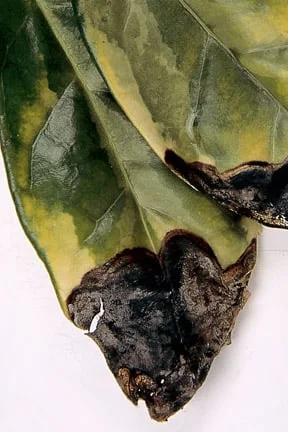
The leaves can develop blackened areas and a the shoot tops many collapse known as aucuba blackening. This is usually caused by wet soil around the roots, especially during cold and wet winters. To avoid this problem all together, plant in well-drained soils. Remove affected leaves or shoots in spring. Encourage new growth by feeding with general fertiliser such as Growmore in lateFebruary.
Cultivars with heavy yellow spotting on their leaves are best planted in shadier situation as the foliage may be scorched if planted in full sun and very dry soil.