RHS / Joanna Kossak

Appearance
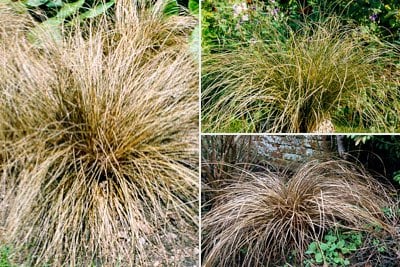
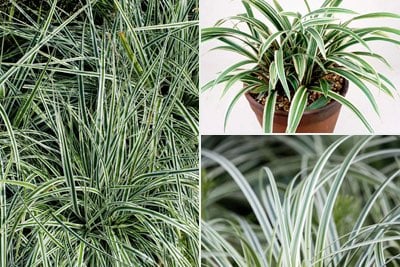
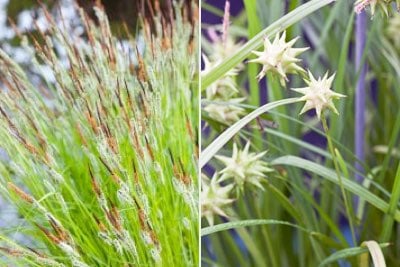
Arching leaves, produced in clumps, can be pale to dark green, bluish-grey, bright yellowish-green or bronze-purple. They can also be edged and striped with white or cream. The often brown, inconspicuous flowers appear in summer-autumn.
Preferences
Most carex prefer reliably moist soil in sun or light shade. A few like wet soil, with others preferring acid soil. Bronze-leaved varieties produce their best leaf colour when grown in sun.
Dislikes
Most sedges will not do well in dry soils or in deep shade.
Did you know?
What distinguishes a sedge from a grass is the flowering stems, which are triangular in cross section and solid, rather than round and hollow.
RHS Growing Guide
FREE
Read our comprehensive free RHS Growing Guide:
How to grow ornamental grasses

Introducing Carex


Carex siderosticta 'Variegata' (v)
variegated creeping broad-leaved sedge
- Height
- 0.1–0.5 metres
- Width
- 0.1–0.5 metres

x of x
Showing
x to x
of x