Quick Facts
Plant in fertile soil in full sun
1
Tall cultivars need staking and shelter from wind
2
Deadhead for more flowers
3
Make new plants from seeds or by division
4
Many attract butterflies and other pollinating insects
5
Protect new growth from slug and snail damage
6

Before you get started
What is a delphinium?
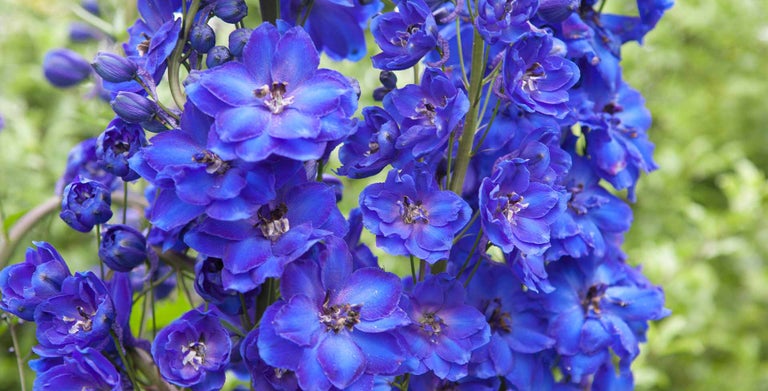
Delphiniums are tall perennials that produce vivid flower spikes in early summer. Most are perennials, thriving in borders for years, and they fall into three main groups based on their looks:
- The Belladonna group have loosely branched flowers with many sidespikes, they flower in early and late summer. The upright, branching plants that can reach 1-1.2m (3-4ft) high and 45cm (18in) wide
- The Elatum group bear the tallest flower spikes, which can be up to 2m (6â…”ft) high, flower in early to midsummer and often again in autumn if cut back. The clump forming plants grow 1.5-2m (5ft-6â…” ft) high by 60-90 cm (2-3ft) wide
- Pacific hybrids are similar to the Elatum group but not so large overall, reaching 1.8m (6ft) and 75cm (30in) wide. These are short-lived perennials and so often best grown as or biennials
Choosing the right delphinium
With so much choice, it helps to narrow down your options by considering the following:
Height — delphiniums come in a range of sizes; from towering perennials such as Delphinium ‘Faust’ that are up to 2m (6⅔ft) tall and so good at the back of borders, to the smaller Magic fountain series at 1m (3⅓ft) tall that are ideal for near the front of borders and in containers. Taller perennials need staking with twiggy sticks/canes or sturdy metal supports the stems can grow through.
Width — don’t forget delphiniums grow wide as well as tall, forming clumps with a spread of 45cm (18in) or more. Those in the Elatum Group can reach 90cm (3ft) wide, so make sure you have room for them - delphiniums grow best when not crowded by other plants
Flower colours and forms — delphinium flowers come in a range of pastel or rich shades of blue, mauve, purple, pink, white and occasionally red. Choose colours that work well with your other plants, either complementing or contrasting. Flowers can be either single or double. Belladonna delphiniums are particularly good for cut flowers.
Did you know?
Pollinating insects, especially bumble bees, like to visit single flowered delphiniums.
Positioning — all delphiniums need full sun to perform well. Tall perennial types also need a sheltered spot, out of strong winds. They are usually best at the back of borders or grouped with other large plants such as ornamental grasses.
To browse photos and descriptions of many delphinium cultivars, or to track down specific cultivars go to RHS Find a Plant. You can also search by height, flower colour, growing position and RHS Award of Garden Merit, to help narrow down your choices.
Around 40 delphinium cultivars have an RHS Award of Garden Merit, which means they performed well in RHS trials, so are a reliable choice.
How and what to buy
Delphinium plants and seeds are widely available in spring and summer in garden centres and online from mail-order suppliers, including :
Top Tip
If space allows, it's worth planting delphiniums in multiples of three or five, to really maximise their impact in your borders.
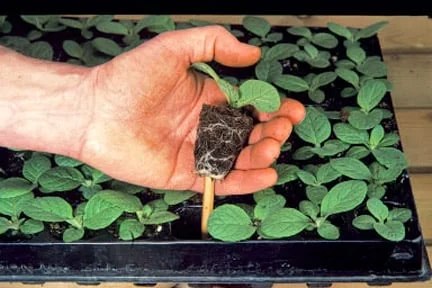
- are available in spring from mail-order suppliers. This is a cheaper way to buy, especially in larger quantities, but the choice of cultivars is limited. Additionally, you need to look after these tiny plants carefully for several months before they are large enough to plant into their final position
- Young and more mature delphinium plants are sold in containers – 9cm (3½in) or larger – ready for planting out
- Seed suppliers sell a range of seed mixes, but be aware that not all cultivars can be propagated from seed
- Specialist growers such as , and sell a range of plants and seeds
Planting
Where to plant
All delphiniums like well-drained soil in full sun. Flowering wil be poor in shade and plants will not thrive in soil that is poorly drained or permanently wet in winter. You should also make sure they are sheltered from winds, as the tall flower spikes can easily bend over or break.
When to plant
Plant delphiniums in borders and containers in spring and early summer, as they become available in garden centres. However, you can plant any time as long as you water in dry spells and don't plant when the soil/ is or frozen.
How to plant
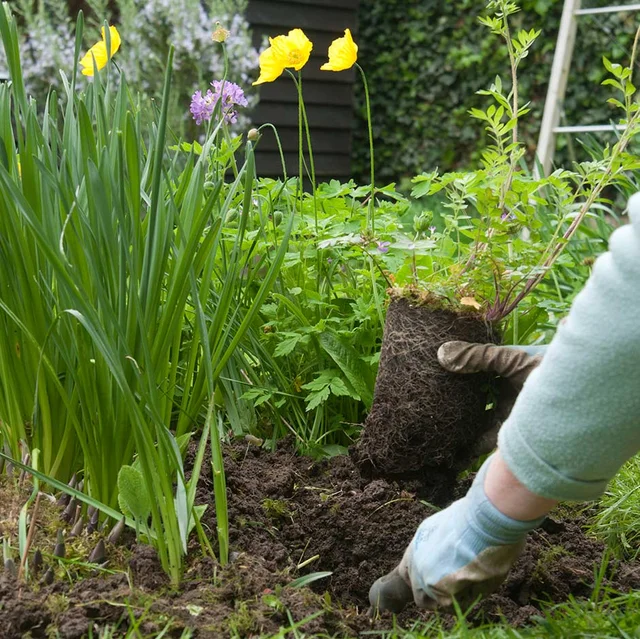
In borders:
Planting delphiums is just the same as planting any plant. See our guide to planting perennials:
In containers:
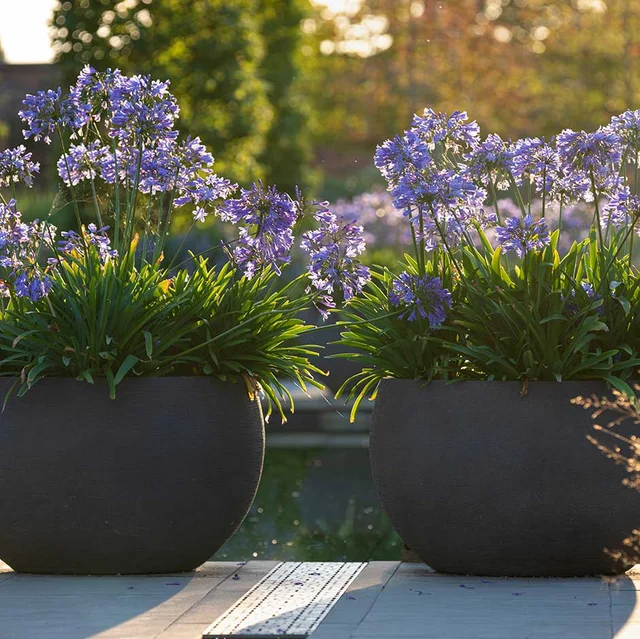
- For short-term planting, use a peat-free multipurpose potting compost
- For permanent planting, use a loam-based compost, such as peat-free John Innes No 2 with added grit to improve drainage
Ongoing Care
Watering
- Water newly planted delphiniums as needed during their first summer to keep the soil around the roots moist until they are well established
- Even when well established, perennial delphiniums may need extra watering in summer with the aim of keeping the soil damp but not soggy
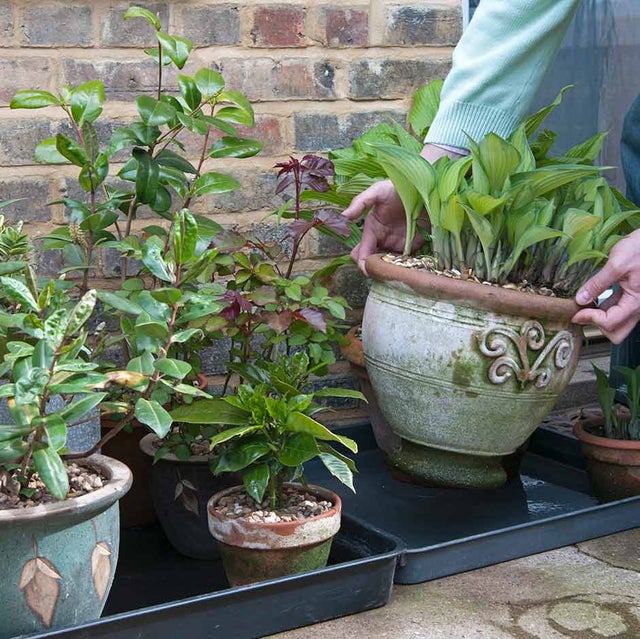
- Avoid plants in containers dry out completely, watering as needed to keep the moist but not . In winter, protect them from excessive rain by moving them into a cold greenhouse or into the rain shadow at the base of a wall. Keeping them drier will improve their tolerance to cold
- See our guide to recycling and collecting water
Top Tip
Reduce your use of mains water by installing water butts on all your down-pipes – not just on your house but on sheds, garages and greenhouses too
Feeding
Delphiniums planted in the ground shouldn't need feeding, however plants grown in containers will benefit from being fed as they have less acess to . In summer, feed with a high potassium fertliser such as . Simply follow the manufacturer's instructions on the pack.
Mulching
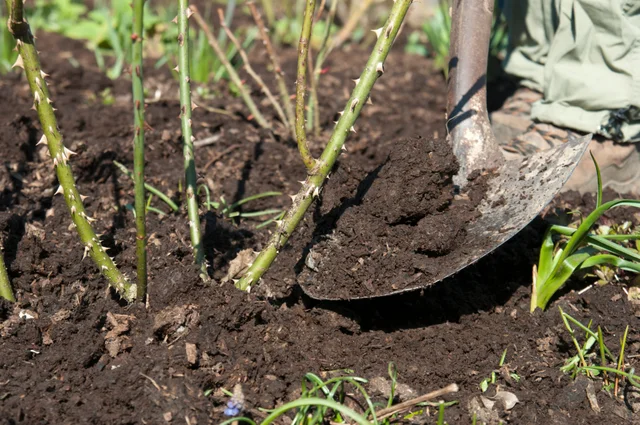
To help keep moisture at the roots and benefit the health of your plants, spread a 5cm (2in) layer of mulch around the outside of delphinium clumps in spring. Use well-rotted organic matter, such as garden compost or farmyard manure.
Overwintering
delphinium are hardy (RHS hardiness rating H5-H6) even in a severe winter, as long as they are grown in free-draining soil and a sunny spot.
Plants in containers are more susceptible to cold, as their roots are less insulated than in the ground.
To help delphiniums in containers survive the winter:
- Move containers to a sheltered spot over winter, where they won't be exposed to really harsh weather
- Protect them from excess winter rain by standing them in the lee of a wall or in a coldframe or greenhouse. Roots in cold, damp compost are more susceptible to rotting
Caring for older plants
Plants will need digging up and dividing in early spring every 2-5 years. The aim is to improve the soil, replant the most vigorous sections, and to increase the number of plants you have. Also see Propagation below.
Pruning and Training
Training and support
- Medium to tall plants, of 1.2m (4ft) or more, need support. Push at least three twiggy stems into the ground, evenly spaced around the clump. Alternatively use metal supports with a grid through which the stems can grow, putting them in place before new growth reaches 30cm (1ft) high
- For supporting a particularly tall flower stems, you can insert a strong into the ground that is the same height as the eventual flower spike. Tie the stem to the cane with soft as it grows
Top Tip
Cut stems of coppiced hazel or birch stems are great for supporting your delphiniums
Pruning and deadheading
- To encourage particularly tall flower stems on mature clumps, thin out the young shoots in spring, leaving just five to seven of the strongest
- Cut down faded flower spikes of perennial delphiniums at ground level to encourage a further flush of flowers
- You can also cut back the old leaves once they die down, after the first frosts, to keep the border tidy
- Be aware that delphinium foliage may irritate skin, so wear gloves when pruning or handling plants
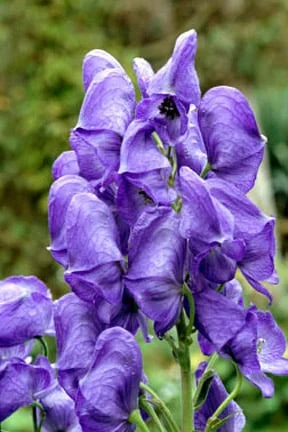
Propagating
You can propagate delphiniums by dividing mature clumps, taking or sowing seeds. But be aware that all parts of delphiniums are poisonous and contact with foliage may irritate your skin, so wear gloves when handling plants and seeds.
By division
The easiest way to propagate delphiniums is by division in spring:
- Divide mature clumps into two to four pieces, discarding the woody centre
- The new plants should flower the same year
From cuttings
Take basal stem (softwood) cuttings of perennial Elatum and Belladonna delphiniums in late spring:
- Use pencil-thick 8–10cm (3–4in) long shoots, which shouldn't yet be hollow, as they would be prone to rotting
- Root in peat-free cuttings
- Keep at 15°C (60°F) and pot up individually when rooted, usually after about ten days
- Plant out in early summer
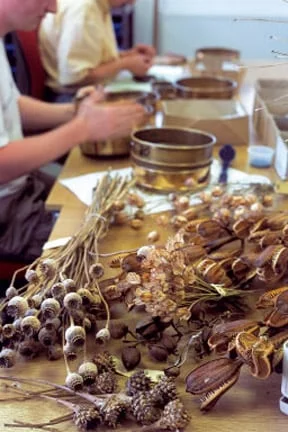
From seeds
Raise new plants of delphiniums such as the Pacific Hybrids and Magic Fountains Series from seed:
- Sow seeds in pots at 13°C (55°F) in spring
- should appear in 14 days
- New plants should flower in about 18 months
- The seedlings may not be exactly the same as the parent plant
Top Tip
Always use fresh seeds when sowing delphiniums as old seed may germinate erratically.
Problems
Delphiniums are relatively trouble free. Slugs and snails can devour young growth in spring, so are the main thing to control.
You may occasionally see some of these pests on the foliage: caterpillars, leaf miners, tortrix moth caterpillars and delphinium moth caterpillars.
Leaves can be affected by powdery mildews, which cause white powdery patches on the leaves. This disease is often worse if the plants are under environmental stress, for example those growing in shade or in very dry conditions. Brown or black blotches on the leaves may be due to delphinium black blotch. Plants can sometimes develop viruses which can cause discolouration and distortion of the growth.
If you are a member of the RHS, you can use our online Gardening Advice Service via MyRHS, for all your gardening questions.