Dorling Kindersley Ltd

Appearance
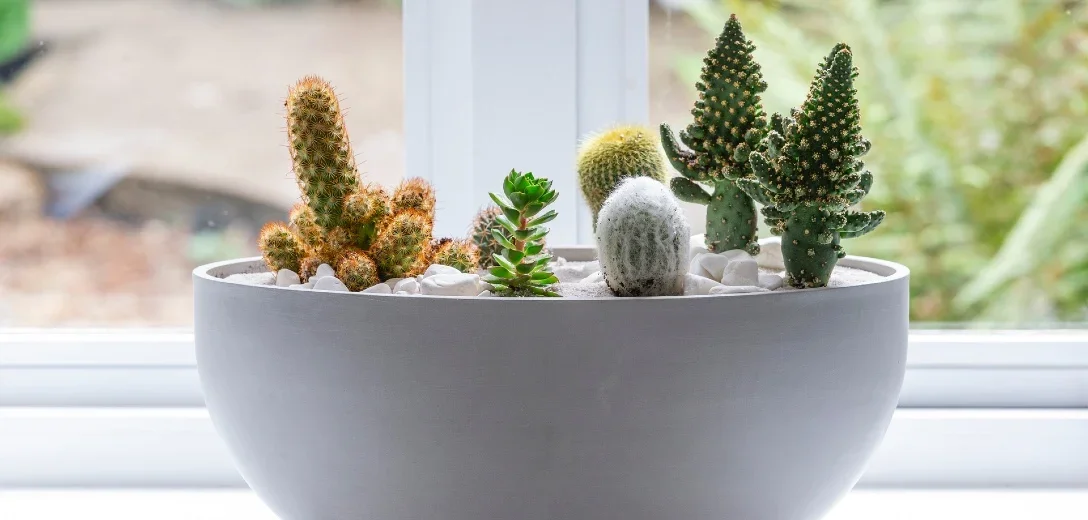
These euphorbia have very diverse appearances, but all have have swollen, sometimes segmented and often leafless stems. Some are ball shaped, others have long lanky lax stems, others erect, branced and upright. Many produce every few years in shades of red, white, pink or yellow flowers in spring or summer.
Preferences
Position in a well-lit spot in the house, particularly over winter. The compost is kept just moist in summer, and allowed to dry in the winter. Some plants are happy taking a summer holiday in the garden in summer, but do check the minimum temperature needed by individual species.
Dislikes
They dislike cold, wet conditions, particularly over winter, so be sparing with the watering. Hot and humid conditions can also lead to disease (such as rotting of the stem and roots), so keep plants in a sunny spot and ventilated in summer where possible.
Did you know?
Euporbia are not true cactus as they do not have areloe - the cusions or small depressions on the stem from the which the spines emerge. As a result, they are classed instead as succulents. They still share many of the physiological adaptations to survive in hot, dry hostile environments, and this is why they generally look pretty similar to cactus.
RHS Growing Guide
FREE
Read our comprehensive free RHS Growing Guide:
How to grow houseplant cacti and succulents

Introducing Indoor and greenhouse euphorbias


x of x
Showing
x to x
of x