Getting Started
Beetroot is a popular and easy-to-grow crop, ideal for beginners. Also known as beets, these plants take up very little room, especially when harvested young, so are ideal if space is limited, and they can even be grown in containers.
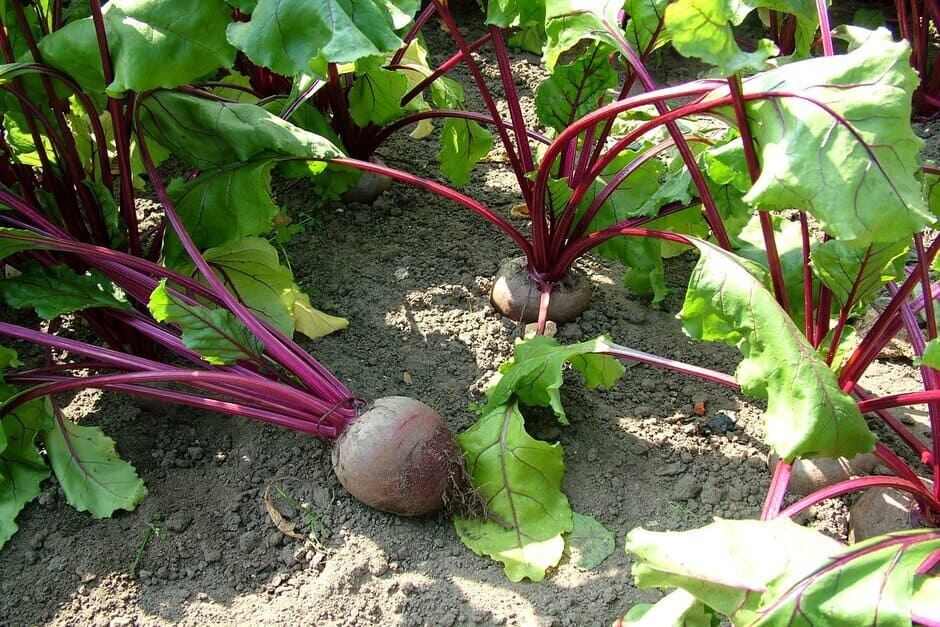
Sow small batches of beetroot (Beta vulgaris) regularly from spring through to mid-summer, for continuous harvests from early summer to mid-autumn. Late harvests can be stored for winter use, so you can enjoy home-grown beetroot almost all year round. Ready in as little as 40 days (though usually between 50 and 60), the roots can be harvested any time from the size of a golf ball up to a cricket ball, but don’t let them get much bigger or they may turn woody.
These sweet, colourful and nutritious roots are packed with vitamins, minerals and other beneficial compounds. The leaves are edible too, and often tinted or veined with red, providing ornamental appeal.
Jobs to do now
Sow seed outdoors
Thin seedlings
Harvest
Water in dry spells
Month by Month
Sow
Harvest


Choosing What To Grow
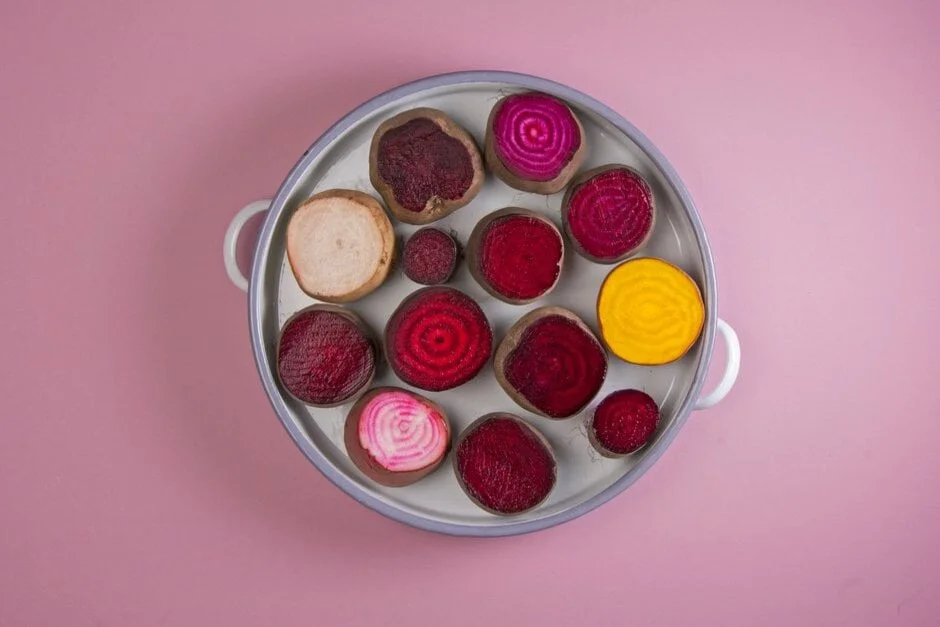
There are many beetroot varieties to choose from, offering different root shapes and colours. Bolt-resistant varieties are a good option, especially for early sowings, which are otherwise prone to . For easy and reliable varieties, look for those with an RHS Award of Garden Merit (AGM), which shows they performed well in our trials. See our list of AGM fruit and veg (135kB pdf) and our Recommended Varieties below. You can also pick up lots of veg-growing inspiration at the RHS gardens, which all grow a wide range of root crops.
Most beetroot varieties produce rounded or oval roots, but there are also choices with long or tapered roots. They vary in colour too – as well as the usual deep purple-red, there are varieties with crimson, orange, yellow, white or even pink-and-white striped roots. The paler colours are easier to prepare in the kitchen, as they don’t stain your hands, however the rich red and yellow pigments have beneficial antioxidant properties. Colour can also indicate flavour, with darker roots usually having a richer, more earthy taste and pale ones being milder and sweeter.
Beetroot leaves can be used like spinach or eaten raw when young. Many varieties produce attractive foliage with dark red veins, while‘Bull’s Blood’has particularly attractive glossy deep-red leaves that make a colourful addition to salads.
What and where to buy
You’ll find a wide selection of beetroot seeds in garden centres and from online suppliers. Some offer collections of several different coloured varieties. A few suppliers also sell young in spring and early summer, ready for planting outdoors.
Recommended Varieties


‘Babietola di Chioggia’
Italian variety with rounded roots that have striking pink and white rings when sliced. They have a mild flavour.

‘Forono’ AGM
The elongated, dark-red root is sweet and easy to peel. Young leaves can also be eaten. Resistant to bolting.


Preparing The Ground
Choose a sunny site with fertile soil that drains well and doesn’t become . Weed the ground thoroughly, then add plenty of organic matter, such as garden compost or well-rotted manure. This improves drainage and enriches the soil. Alternatively, if you're practicing no-dig, the surface and sow or plant directly into the mulch.
If sowing in early spring, especially in heavy clay soil, it’s best to warm the ground first, for a couple of weeks, using cloches. This shouldn’t be necessary on light, sandy soil, which warms up more rapidly in spring.
Sowing
Beetroot seeds are large and easy to sow, in most cases made up of a cluster of seeds rather than just one. They are usually sown straight into the ground, from early spring to mid-summer, but can also be sown in indoors for an early start.
Top tip
Beetroot seeds can be slow or reluctant to germinate – soaking them in warm water for an hour before sowing should produce better results.
Sowing indoors
Early sowings can be made indoors, especially in colder areas. Use modular trays filled with peat-free and sow one seed cluster in the centre of each, at a depth of 2.5cm (1in). If more than one seedling germinates per module, thin out the weaker ones to leave the strongest. Alternatively, to grow clumps of small roots, sow up to four seeds per module and don’t thin out the . Transplant them outdoors without splitting them up (see Planting).
Sowing outdoors
Sow beetroot seeds outdoors once the weather starts to warm up in spring and the soil temperature reaches at least 7°C (45°F) – from late March or April through to July. You can sow earlier too if you wish, from late February, but choose a bolt-resistant variety and cover the row with biodegradable fleece or cloches to encourage . If you make regular sowings of short rows every few weeks, you’ll have harvests over a long period.
After preparing the ground, sow the seeds in drills, 2.5cm (1in) deep, with 30cm (1ft) between rows. Water along the base of the , then sow the seeds 10cm (4in) apart – the corky seed clusters are quite large, so are easy to sow individually. Alternatively, sow two or three seeds together, spacing each group 15cm (6in) apart, to produce clusters of smaller roots, ideal for harvesting as baby veg. This option is also useful when space is tight. Cover the seeds with soil, then water the row if the ground is dry.
Sowing outdoors in containers
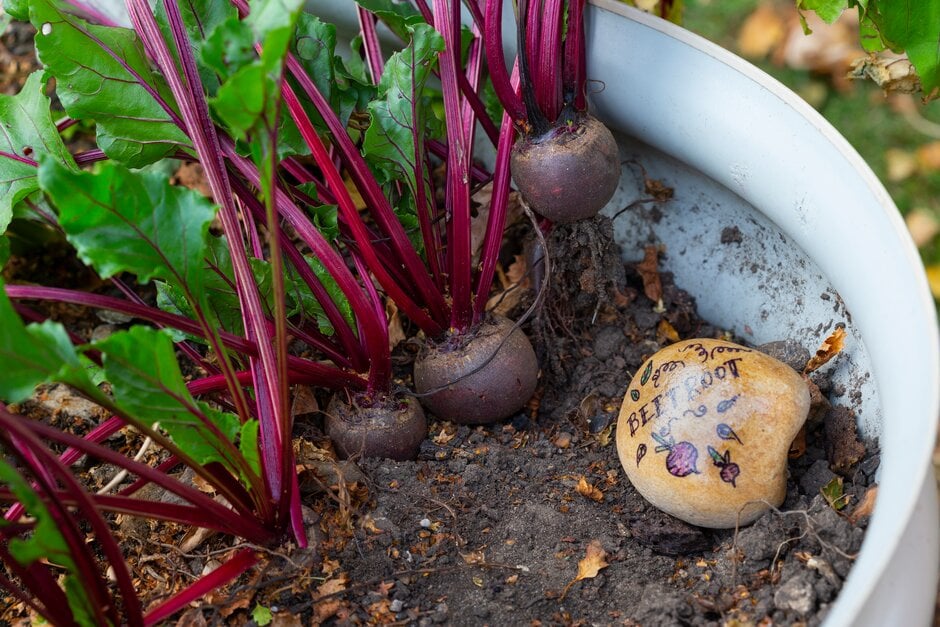
Beetroot seeds can also be sown in a large container at least 40cm (16in) wide, positioned in a sunny spot. Select varieties with rounded roots, rather than long deep ones. Fill the container with peat-free multi-purpose then water well. Space the seeds 10cm (4in) apart and cover with about 2.5cm (1in) of compost.
Thinning out seedlings
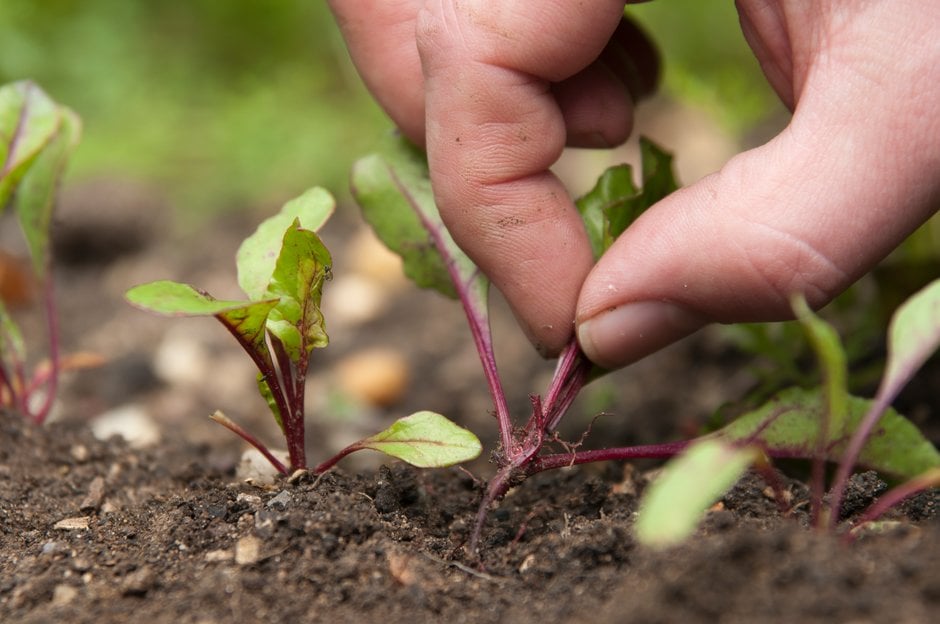
There is usually no need to thin out beetroot if you want to harvest the roots when small, about the size of a golf ball. But if you want larger roots, up to cricket ball size, then thin the seedlings once they are about 2.5cm (1in) tall, them out to 10cm (4in) apart and removing the weaker ones. You can add the thinnings to salads.
Planting
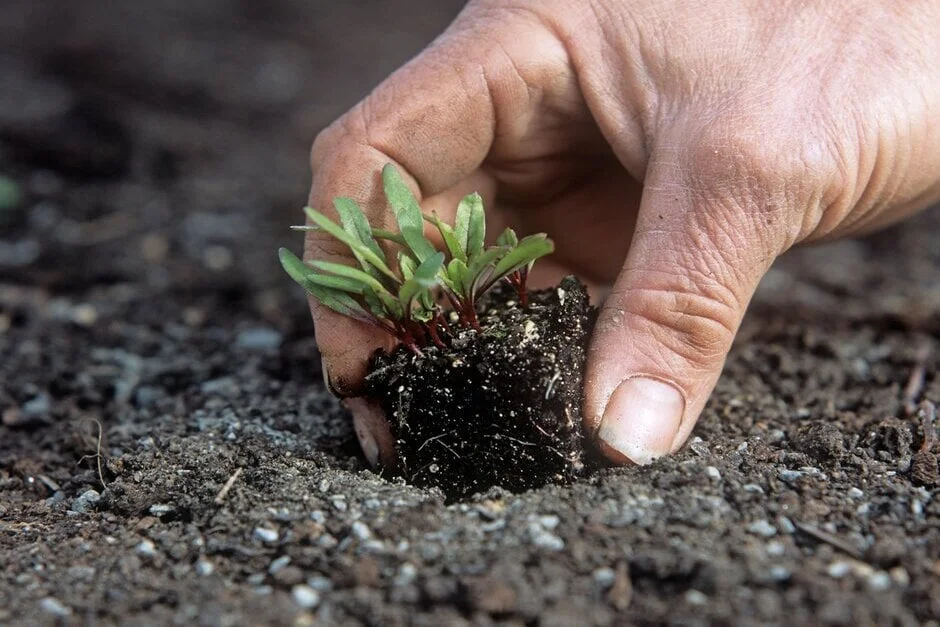
Young beetroot plants grown from seed in indoors, or bought as , can be planted outside once they’re at least 5cm (2in) tall and well rooted. Harden them off first, to acclimatise them to outdoor conditions, and prepare the soil as outlined above.
If planting in a container, choose one that’s at least 40cm (16in) wide and deep, and fill with peat-free multi-purpose . Transfer each module straight into the ground or the container, taking care to avoid any root disturbance. Space single plug plants 10cm (4in) apart. If the modules contain several plants, don’t split them up, just plant each clump 15cm (6in) apart. Firm in gently and water well.
Plant Care
Watering
Water regularly during dry spells, until they are well rooted and growing strongly. Once established, beetroots don’t usually need much watering, although the roots will generally be more tender if the soil is kept fairly moist.
A lack of water can cause the roots to turn woody, while uneven watering may cause them to split. But don’t be over-generous – excessive watering can lead to too much leafy growth, at the expense of root growth. So, during dry spells or in very free-draining soil, water every 10–14 days. Plants in containers need regular watering throughout their growing period, as the limited amount of dries out quickly.
Feeding
If your plants aren’t growing strongly and need a boost, apply an organic high-nitrogen liquid fertiliser.
Weeding
Weed regularly to reduce competition for and water. This is particularly important while the plants are young. It’s best to weed by hand close to the plants, to avoid accidentally damaging the top of the root with a hoe blade.
Harvesting
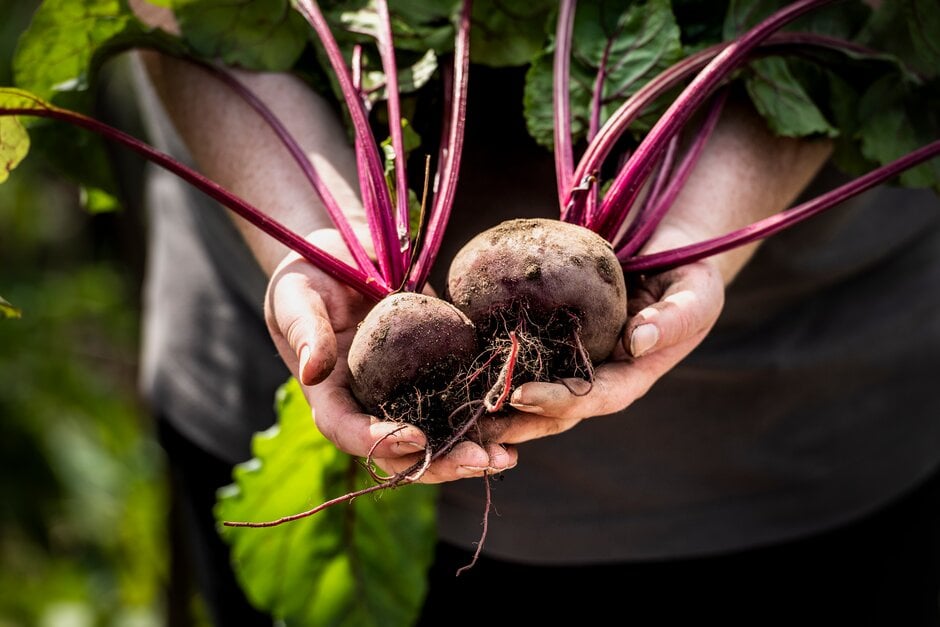
Beetroot can be harvested from early summer through to mid-autumn, depending on sowing time and variety. Loosen the soil with a hand fork, then lift out alternate plants once the roots reach golf-ball size, leaving the rest to grow to maturity if you wish. Harvest these when no larger than a cricket ball.
The roots can be eaten raw, especially when young, or can be steamed or roasted to bring out their sweet flavour. Bear in mind – red varieties will stain your hands, so you may want to wear rubber gloves when preparing them.
Beetroot leaves can be cooked like spinach, and young leaves can be added raw to salads. The leaves can either be harvested at the same time as the root or you can take a few leaves from each plant through the . Just be careful to leave at least four or five on each plant, to help it continue growing strongly and swelling its root.
Storing
Beetroots sown from June onwards can be harvested in autumn and stored for use in winter. Larger roots store better than small ones. Harvest carefully to avoid damaging them, brush off the soil and cut or twist off the leaves about 2.5cm (1in) from the base. Then place in a container of dry sand, potting or coir, in a garage or shed, where they should keep for at least a couple of months.
In mild locations where there is no risk of the soil freezing in winter, late crops of beetroot can be left in the ground until needed.
Problem Solving
Beetroots are easy to grow, resilient and usually trouble free. Harvest when young and water in dry spells to prevent them turning woody. In hot, dry weather or if sown in very cool conditions, beetroots may bolt(produce flowers rather than swelling the root) – to avoid this, choose bolt-resistant varieties. For more on this and other issues, see Common problems below.
Common Problems

Bolting in vegetables
Bolting is the term applied to vegetable crops when they prematurely run to seed, usually making them unusable. A cold spell or changes in day length...

Beet leaf miner
Beet leaf miner is a fly whose larvae tunnel inside the leaves of beetroot, spinach beet, Swiss chard and some other related plants creating large irr...

Downy mildews
Downy mildews can spoil the appearance of ornamental plants and affect the yield and quality of edible crops. Control depends on cultural techniques a...
