Getting Started
Sweet, tasty and packed with vitamins, carrots are a traditional grow-your-own favourite. They are straightforward to grow from seed, taking up little space, and can also be grown in containers. Sow small batches regularly from early spring onwards, for harvests almost all year round.
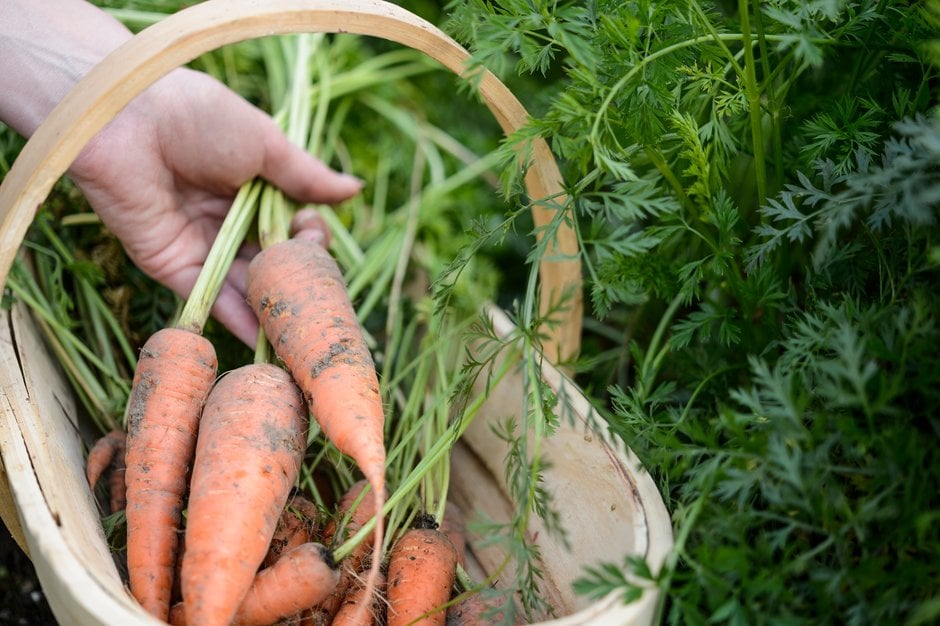
Home-grown carrots may not always be as straight and uniform as those sold in supermarkets, but they taste so much better and sweeter when freshly harvested. Carrots (Daucus carota) like sun and light, well-drained soil, and are drought resistant, so rarely need watering unless grown in containers. Baby carrots can be harvested in only four to six weeks, while larger carrots usually take three months or more.
Jobs to do now
Sow seed outdoors
Thin seedlings
Harvest
Water in dry spells
Month by Month
Sow
Harvest


Choosing What To Grow
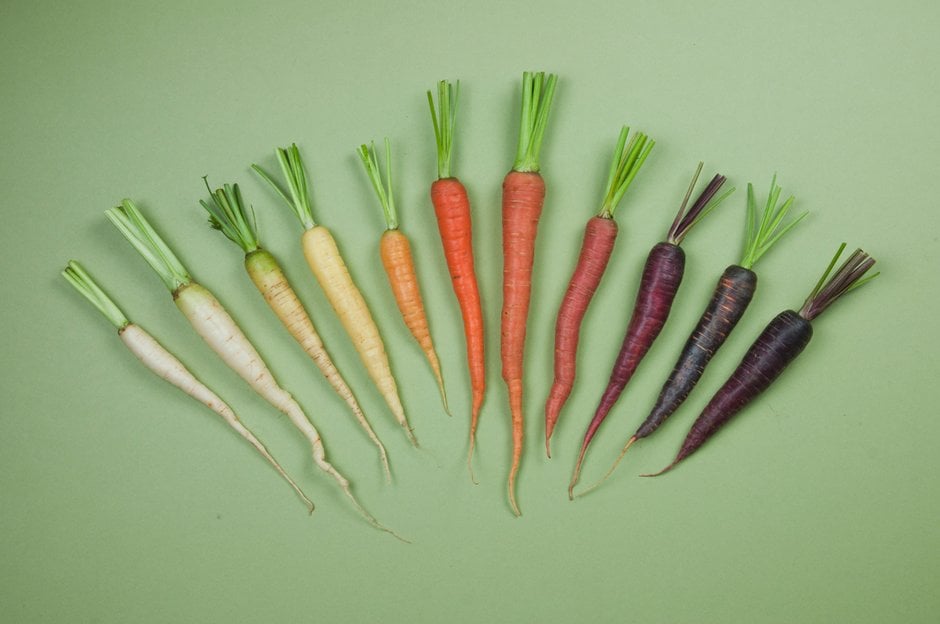
There are numerous varieties to choose from, for roots of various sizes and shapes. There are even different colours, including purple, white and yellow. Choose early varieties for sowing from early spring, then main-season varieties for sowing from late spring through to mid-summer.
Stony, shallow or heavy clay soil can cause long-rooted carrots to become misshapen – short-rooted types should fare better in these conditions. Although just as delicious, wonky or forked carrots can be harder to clean or slice evenly. Long-rooted varieties are suitable for deep, sandy soil.
For overall reliability, look for varieties with an RHS Award of Garden Merit (AGM), which shows they performed well in trials – see our list of AGM fruit and veg (135kB pdf) and our Recommended Varieties below. You’ll also find carrots and other root crops growing in the veg areas of the RHS gardens, so do visit to compare varieties and pick up growing tips.
A few varieties offer some resistance to carrot fly.
What and where to buy
Carrot seeds are widely available from garden centres and other seed stockists. They are usually reasonably cheap, with plenty of seeds in a packet.
Recommended Varieties

'Sweet Candle' AGM
Main-season variety – a popular, high-yielding variety with smooth orange skin.

'Adelaide' AGM
Early variety – can be sown in February or March under cloches. Smooth skinned, sweet and crunchy.

'Sugarsnax 54' AGM
Main-season variety – deliciously sweet, the tapered roots are great as baby carrots or larger.


Preparing The Ground
Sowing
Carrots should be sown directly outdoors, as transplanting can disturb the roots and lead to forked or distorted carrots. The main sowing season is from April to early July. The seed packet will state whether it’s an early or main-season variety. Early varieties can be sown in February or March if protected with cloches or biodegradable fleece. Avoid sowing in ground that has recently been used for carrots, as it may harbour carrot fly eggs.
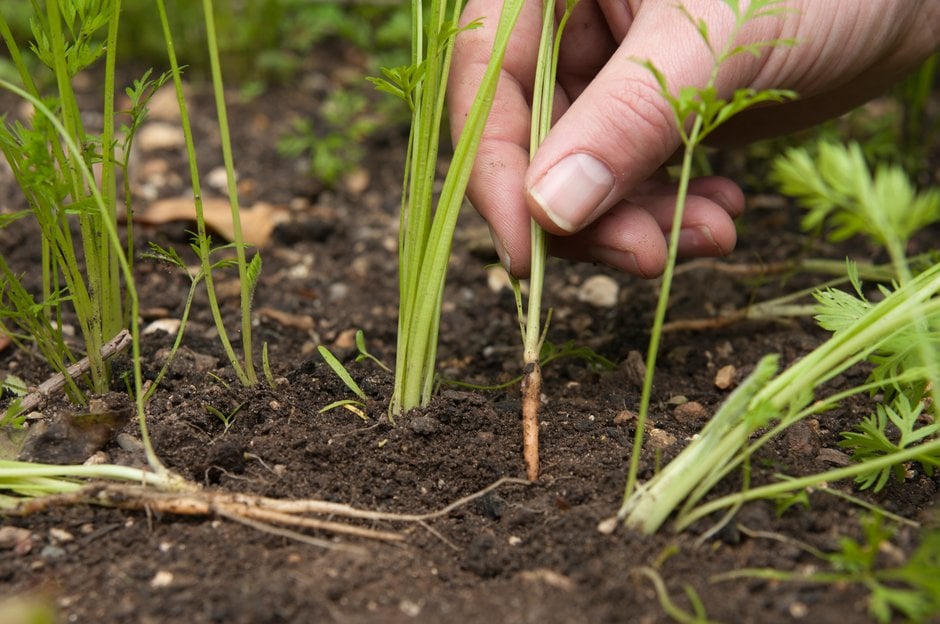
Make a shallow , about 1cm (½in) deep, water along the base, then sow the carrot seeds as thinly as possible along its length. Space any additional rows 15–30cm (6–12in) apart. Carrot seeds can be slow to germinate, so be patient. Sowing small batches every three to four weeks will give you continuous harvests. Protect carrot from slugs and snails if possible, and cover the crop with insect-proof mesh to keep carrot fly away. Thin out the seedlings if necessary, aiming for plants 5–7.5cm (2–3in) apart. For more sowing tips, see our guides below.
Sowing in a container
Carrots grow well in containers of peat-free multi-purpose , so are a great crop if you have limited space. Sow thinly and cover the seeds with about 1cm (½in) of compost, then water well. Small, round-rooted varieties are ideal for most containers. Deep containers are needed for long-rooted carrots; alternatively they can be harvested when young, as baby veg, if grown in shallow pots.
Plant Care
Watering
Carrots are drought resistant, so seldom need watering. However, in long dry spells they will benefit from a good soaking every fortnight to keep them growing consistently. The roots can split if moisture levels vary a lot. When growing in containers, which dry out more quickly, they should be watered regularly.
Protecting your crop
Carrot fly can potentially ruin your crop, as the larvae tunnel into the roots, leaving holes that are susceptible to rotting. Late-sown carrots (after mid-May) avoid the first generation of the fly, while carrots harvested before late August avoid the second generation. RHS research found that the most effective method of preventing damage from these low-flying insects is to entirely cover the crop with insect-proof mesh. Crop rotation is also important – avoid sowing in ground that has recently been used for carrots.
Weeding
Fast-growing weeds can crowd out carrots, so remove them regularly – hoe between rows, but hand weed close to the plants to avoid damaging the top of the root. Try to avoid touching the foliage when weeding, as the smell attracts carrot fly, and replace the insect-proof mesh as soon as you finish weeding.
Harvesting
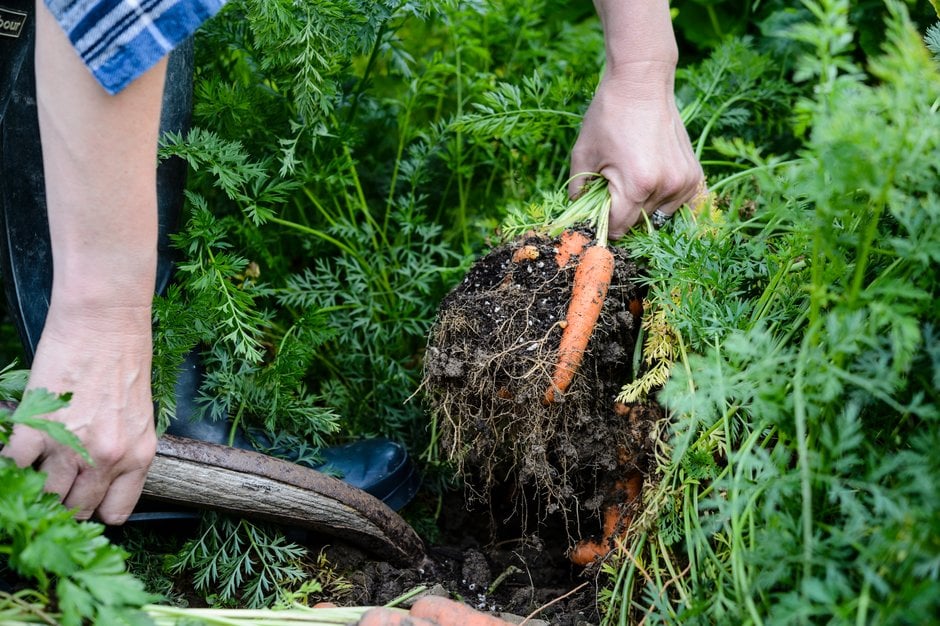
Carrots are ready to harvest about 12–16 weeks after sowing. Harvest as soon as they’re large enough to use – don’t aim for the biggest roots as flavour tends to decline. Spring sowings in particular are best when young, sweet and crunchy, ideal for eating raw. Baby carrots, just a month or two old, are also full of flavour.
Main-season carrots, grown to full size, can be harvested through summer and into early autumn. They can also be left in the ground into winter, for harvesting whenever needed. Lift carrots carefully using a fork to avoid snapping them, especially if your soil is heavy.
Storing
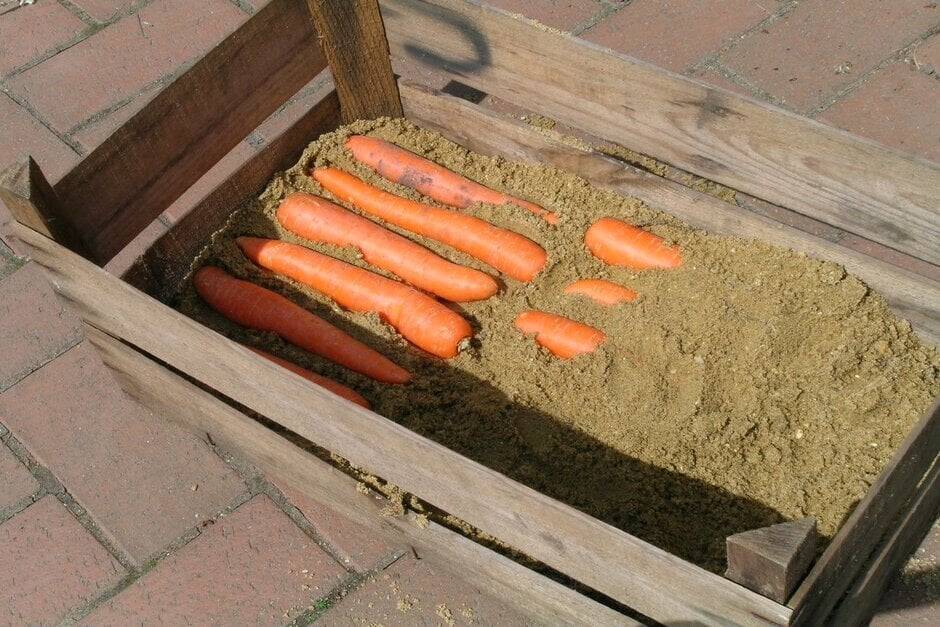
At the end of the season, in late autumn, you can leave carrots in the ground and lift them as and when required through winter. Just remove the leaves and cover the crop with straw or cardboard to protect the roots from frost. But if your soil gets over winter, it’s better to lift and store any remaining carrots – see our guide below for detailed advice.
Problem Solving
Carrots are generally easy and trouble free, especially when harvested young or as baby carrots. However, are vulnerable to slugs and snails, and carrot fly larvae can tunnel into the roots. Stony ground can cause the roots to fork or become misshapen, so try to remove any stones before sowing, or grow round-rooted types. For more on spotting and tackling these issues, see Common problems, below.
Common Problems

Root vegetables: splitting
When root vegetables are harvested, they are sometimes found to have split open, rendering many crops useless and causing much disappointment. There a...

Carrot fly
The larvae of carrot fly can make a large proportion of carrots and allied vegetable crops inedible.

Mice and voles
Mice and voles are small rodents that sometimes damage plants in gardens and greenhouses.


