Getting Started
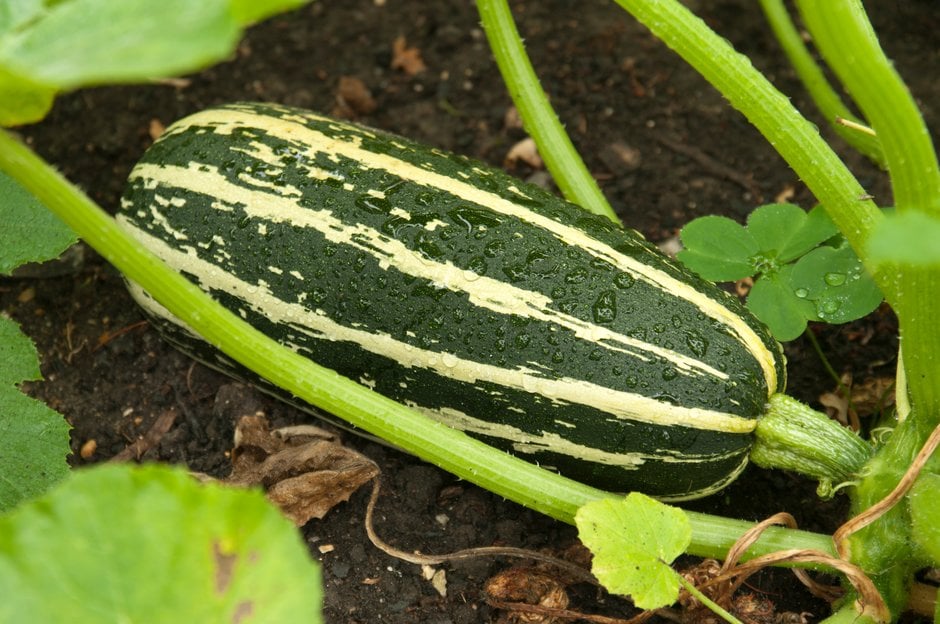
Marrows are tender plants and love warmth, sun and plenty of water. They can quickly grow into large plants, producing sizeable fruits in a relatively short time. Marrows are essentially large courgettes, but their skin can be ripened until it becomes hard, so the fruits can be stored for later use. Both marrows and courgettes are the same botanical species (Cucurbita pepo), but marrow varieties are particularly bred for cropping when the fruits are larger and for their ability to store.
Jobs to do now
Water in dry spells
Feed container plants
Harvest
Month by Month
Sow
Plant Out
Harvest


Choosing What To Grow
There are several marrow varieties to choose from, although any courgette variety will produce marrows if you leave the fruits to grow. There are trailing types that can spread over several metres, and bush types that are slightly more compact, for smaller gardens or containers. Marrow fruits are traditionally green and usually striped lengthways, although there are yellow-skinned varieties too.
For the most reliable varieties, look for those with an RHS Award of Garden Merit (AGM), as these performed well in our trials – see our list of AGM fruit and veg (135kB pdf) and our Recommended Varieties below. You may also find marrows growing in the veg areas of the RHS gardens over the summer months, so do visit to compare varieties and pick up growing tips.
What and where to buy
Marrow seeds are readily available from garden centres and online seed stockists. In spring, you may also find young marrow plants on sale in garden centres and online. These are useful if you don’t have the time or space to grow from seed, but the choice of varieties may be limited. If you buy after the last frost, they can usually be planted out straight away – although do check with the seller to make sure they have been hardened off.
Recommended Varieties

‘Badger Cross’ AGM
Bush variety – small, well-shaped, striped marrows. An F1 hybrid, resistant to mosaic virus.


‘Tiger Cross’ AGM
Bush variety – early to crop, green and cream striped marrows. A modern British-bred F1 hybrid.

Preparing The Ground
Choose a warm, sunny location for marrows, where you can space plants at least 90cm (3ft) apart for bush varieties and 1.5m (5ft) apart for trailing varieties. Prepare each sowing/planting site by digging in lots of home-made garden compost or well-rotted manure, to the depth and width of a spade’s blade. Ideally do this a few weeks before sowing or planting out, to allow the soil to settle. Alternatively, if you're practising no-dig, the soil at each site ahead of sowing or planting directly into the mulch.
Sowing
Marrows grow readily from seed in warm conditions. They are best started off indoors in spring, where they can be kept reliably cosy and protected from slugs and snails, but you can sow them outdoors too, after the last frost.
Sowing indoors
For a longer cropping season or more reliable results in colder regions, start marrows off indoors from mid- to late April.
Sow the seeds into 7.5cm (3in) pots or a modular tray filled with moist peat-free . Position the seed on its side, 1.5cm (½in) deep, sowing one per pot/module, to minimise root disturbance when planting out later. Water in, then keep at 18–21°C (65–70°F) in a . Alternatively, place on a warm sunny windowsill and cover with clear plastic bags until the appear. Keep young marrow plants indoors until after the last frost, in a warm, bright spot and water regularly. For more sowing tips, see our guides below.
Sowing outdoors
You can sow marrow seeds outdoors in late May or early June. If possible, warm the soil for a couple of weeks ahead of sowing, especially in cooler locations, by covering the ground with cloches or plastic-free fleece. The soil should be at least 13°C (56°F) for successful .
Sow two or three seeds in the centre of each prepared site, 2.5cm (1in) deep, then water well. Cover with cloches or plastic-free , and leave in place for as long as possible after germination. If more than one seed germinates per sowing site, remove the smaller, weaker to leave just the strongest one.
Germination outdoors may be less reliable than indoors, and the young seedlings are vulnerable to slugs and snails, especially in damp conditions. Outdoor-sown marrow plants will usually start cropping later than those sown earlier indoors.
Planting
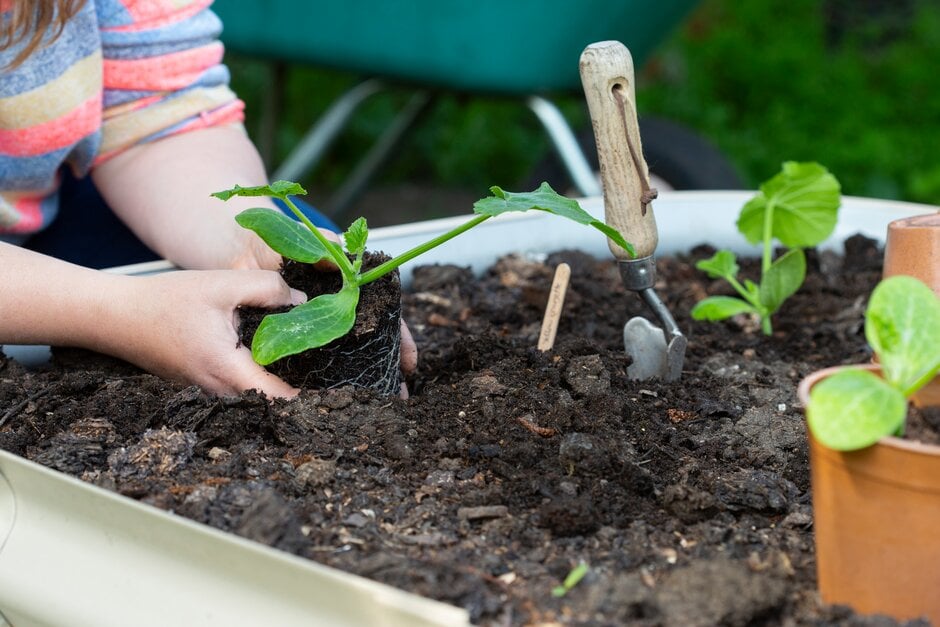
Young marrow plants grown from seed indoors should be ready for planting out in early summer, once the soil has warmed up. If you haven’t grown your own from seed, you can simply buy young marrow plants in late spring and early summer.
Harden off young plants to gradually acclimatise them to outdoor conditions and make sure your planting sites are prepared in advance (see Preparing the ground above). Then gently remove each young marrow plant from its pot, without disturbing the roots, and plant into the centre of your prepared sites. Firm them in, then water well. Protect the young marrow plants from slugs and snails, especially in damp weather.
Planting in a container
Marrows generally crop best in the ground, but compact or bush varieties can also be grown in a large container. Just bear in mind that plants will need regular watering and feeding to swell the large fruits. Also make sure there is plenty of space around the outside of the container, so the marrow plant can spread out its large leaves. Overcrowding and poor air circulation encourage fungal diseases.
Choose a container that’s at least 45cm (18in) wide, fill it with peat-free soil-based or multi-purpose , then plant one young marrow plant in the centre.
Plant Care
Watering
Marrows need regular and generous watering, especially when flowering and fruiting, and when growing in containers. Aim to keep the soil or potting consistently moist. During hot spells, plants may need watering daily, and this is best done early in the morning or in the evening so the moisture doesn't simply evaporate.
Use rainwater from a butt if possible, and when you water, try not to wet the leaves, as this can encourage fungal diseases such as powdery mildew. For more water-wise advice, see our guides below.
Top tip
Sink a 15cm (6in) pot into the ground alongside your marrow plant and water into it, so the water goes directly down to the roots. The moisture doesn’t then sit around the neck of the plant, which can lead to rotting.
Mulching
Cover the ground around marrow plants with a thick layer of to help hold moisture in the soil, reduce the need to water, and deter weed . Use garden compost or well-rotted manure, but leave a gap around the base of the stem, to keep dampness away, which could cause rotting.
Feeding
Marrows growing in the ground don’t generally need feeding, unless the soil is very poor. But if you want particularly large fruits for exhibition, or are growing marrows in containers, then it’s worth feeding regularly – apply a high potassium organic liquid fertiliser, such as , every 10–14 days once the first fruits start to swell.
Looking after fruitsÂ
Place a tile or wooden board under developing marrows to lift them off damp soil and help to prevent rotting. To ripen a marrow’s skin for storage, ensure the fruit gets plenty of sun, and carefully turn it occasionally to expose the underside.
If you want to produce giant marrows for shows or competitions, keep just one marrow on the plant, removing any others that start to form, so the plant puts all its energy into growing just one large fruit. Regular watering and feeding with a potassium-rich organic fertiliser, such as , will also help to increase fruit size.
Pruning And Training
Remove any leaves that become tatty or are affected by powdery mildew. This helps to expose the marrows to the sun, to ripen the skin.
Harvesting
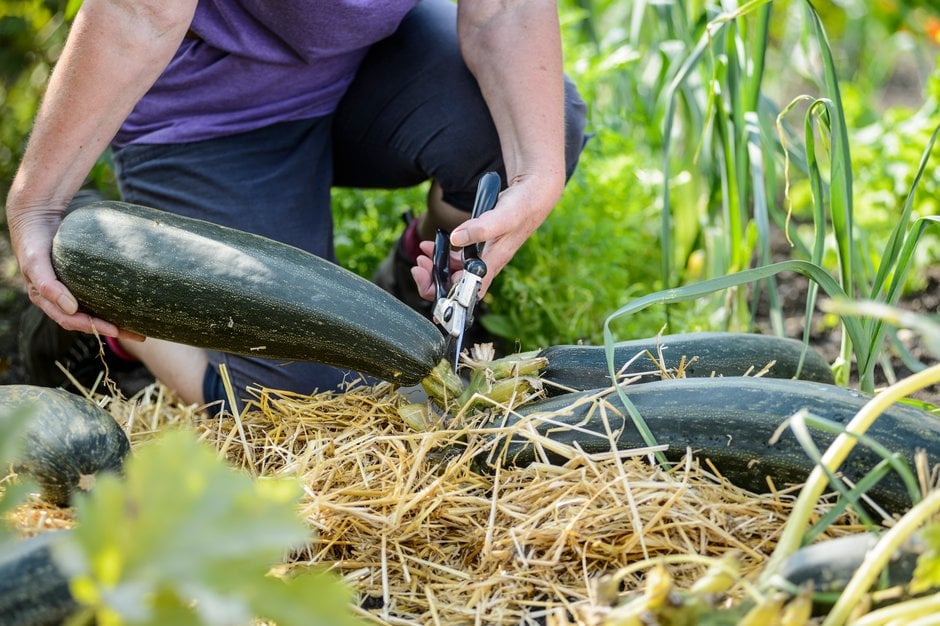
Marrows can be harvested from mid-summer, at 20–30cm (8–12in) long, for use straight away. The flowers are also edible. Harvesting marrows regularly encourages plants to produce further fruits, and in warm, damp weather these can grow rapidly. Later in the season, the fruits can be left to reach full size and mature on the plant, for storing. Harvest the last marrows before any frosty weather arrives.
Storing
Marrows for storing should be left to fully ripen in the sun until the skin is hard. But bring them indoors well before any frost. Place them in a cool, dark, frost-free place, such as a garage, where they should keep for a month or two. Check them regularly for signs of deterioration or rot.
Problem Solving
Marrows are tender plants, so can be damaged or killed by cold weather or frost. In early summer, plants may produce no fruit or the fruits may rot when very small – this is caused by cool weather, leading to poor , but should remedy itself once the temperatures improve. Marrow plants can also be affected by various fungal diseases, and slugs and snails may eat young plants, flowers and young fruits. See Common problems below for advice on how to spot and tackle these issues.
Common Problems

Courgette, marrow, pumpkin and squash problems
Courgettes, marrows, pumpkins, squashes and other members of the cucurbit family are fun to grow. It can be worrying, then, when problems strike. Know...

Grey mould
Grey mould, caused by the fungus Botrytis cinerea, is a very common disease, causing a soft decay of plant tissues accompanied by a growth of fuzzy gr...
