Getting Started
Swedes are hardy root vegetables, harvested in autumn and winter. They’re closely related to turnips and outwardly similar, but usually have yellow flesh and a stronger, sweeter flavour.
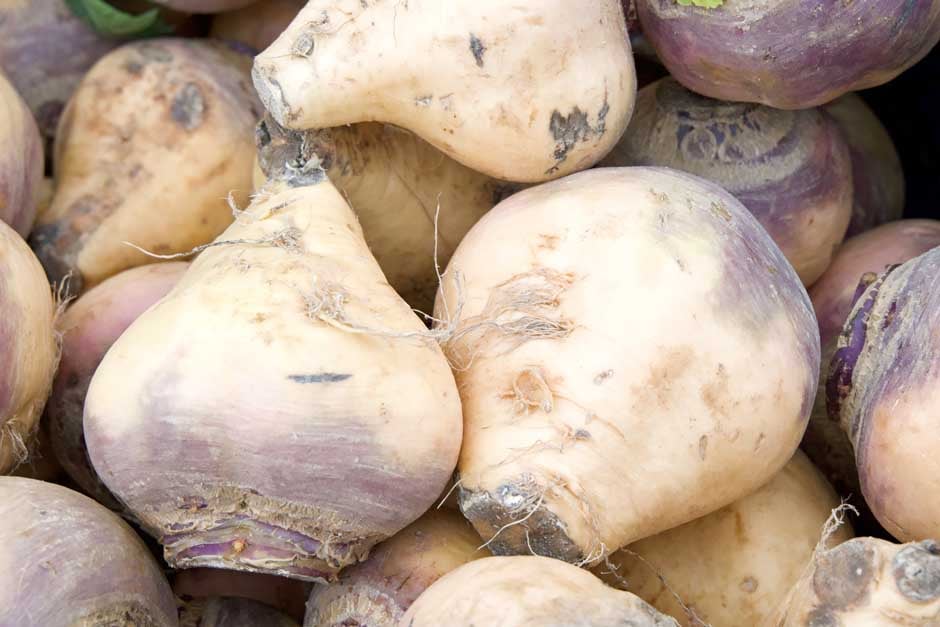
The name ‘swede’ is short for Swedish turnip, and in some regions they’re known as turnips. In Scotland they’re often called neeps, and in the US they’re rutabaga.
Swedes (Brassica napus Napobrassica Group) are usually sown direct outdoors in spring and early summer. They form a large, rounded root/swollen stem, usually dark purple at the top and creamy-yellow below ground. Like many other brassicas, swedes are slow growing, taking up to six months to mature. They can be dug up as soon as they’re large enough to use, from early autumn, or left in the ground until Christmas or beyond, providing harvests over a long period.
When cooked, they have a sweet, nutty flavour and creamy, yellow flesh. Swedes are usually served mashed with butter or added to soups, stews and other hearty winter dishes. They are rich in vitamins, minerals and fibre.
Jobs to do now
Thin seedlings
Water in dry spells
Month by Month
Sow
Plant Out
Harvest

Choosing What To Grow
There are numerous varieties of swede to choose from, forming large, rounded roots, usually with a purple top and creamy-white base, and pale yellow flesh. Sowing times vary, so check seed packets. Some varieties keep better than others, so if you’re planning on harvesting right through winter, choose one that won’t turn woody and will store well. Many varieties have good resistance to club root and powdery mildew.
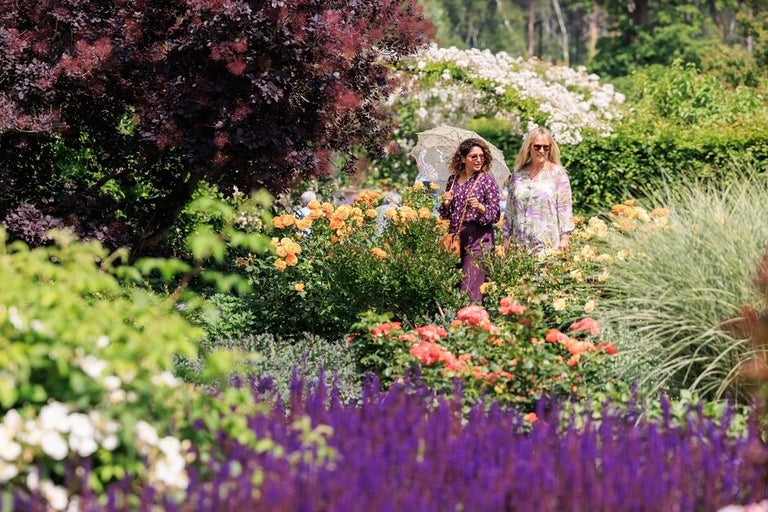
Varieties with an RHS Award of Garden Merit (AGM) performed well in trials, so are always reliable choices – see our list of AGM fruit and veg (135kB pdf) and our Recommended Varieties below. You can also see many crops, including swedes and other brassicas, in the veg plots at the RHS gardens, so do visit to explore how they’re grown, compare varieties and get useful tips and inspiration.
What and where to buy
Swede seeds are readily available in garden centres and from online seed suppliers.
Recommended Varieties

'Gowrie' AGM
Good flesh colour and texture. Can be harvested through to January. Image © Shutterstock
'Brora' AGM
Reddish-purple skin, creamy-yellow flesh with no bitterness. Image © Shutterstock
Preparing The Ground
Swedes grow best in an open, sunny site with moist but free-draining, fertile soil. Dig in plenty of garden compost or well-rotted manure, ideally well ahead of sowing. If your soil is acidic, apply lime to raise the – if you're unsure if lime is needed, do a simple soil pH test.
To prepare the soil, weed thoroughly and remove any large stones. Then firm the soil by treading it down in a shuffling motion, before raking the surface level. Alternatively, if you're practicing no-dig, the soil with organic matter ahead of sowing directly into the mulch.
Sowing
Swedes can be sown outdoors from late spring to early summer. Alternatively, you can start them off indoors to get a head start, then transplant them outside after a few weeks. Swedes are brassicas, so should be grown with their cabbage relatives in crop rotations, which helps to avoid a build-up of insects and diseases in the soil. If you sow several small batches a few weeks apart, you can spread your harvests over a longer period. Swedes aren’t suitable for growing to full size in containers, but can be grown in containers as a quick crop of baby veg.
Sowing outdoors
Swedes are best sown direct where they are to grow, from late spring to early summer. Prepare the ground as explained above, then make a shallow about 2cm (¾in) deep. Water along the base, then sow the seeds thinly. Space rows 38cm (15in) apart. Cover early sowings with cloches or plastic-free fleece, and protect from slugs and snails.
As soon as they’re large enough to handle, thin out swede seedlings to 20–25cm (8–10in) apart. If you’re going to harvest as baby veg, they only need to be 8–10cm (3–4in) apart.
Sowing in containers
Swedes are usually grown in the ground, but baby swedes can be grown in a large pot, in a warm, sunny location. Choose a container that’s at least 40cm (16in) wide and fill with peat-free multi-purpose , then water well. Sow the seeds thinly then cover lightly with compost. Once the seeds germinate, thin out to 8–10cm (3–4in) apart, for harvesting as mini veg.
Sowing indoors
To get a head start, swedes can be sown indoors from mid-spring, in modular trays filled with peat-free . Sowing in means there’s minimal root disturbance when transplanting outdoors, which should be done before they start to form their main tap root. For sowing and transplanting tips, see our guides below. Harden off the young plants carefully before planting out in early summer, to avoid a check in growth.
Plant Care
Swedes are a long-term crop, taking up to six months to mature. Weed around them regularly, especially when the plants are young, and provide plenty of moisture to help the roots swell.
Watering
Water young swede plants regularly until well rooted. Then aim to keep the soil evenly moist by watering during dry spells. If growing baby veg in a container, water regularly as the will dry out quickly. For water-saving tips, see our guides below.
Mulching
Spread a thick layer of mulch, such as well-rotted manure or garden , over the soil surface to hold moisture in the ground and deter weeds. is especially useful on light, sandy soil that would otherwise dry out rapidly.
Weeding
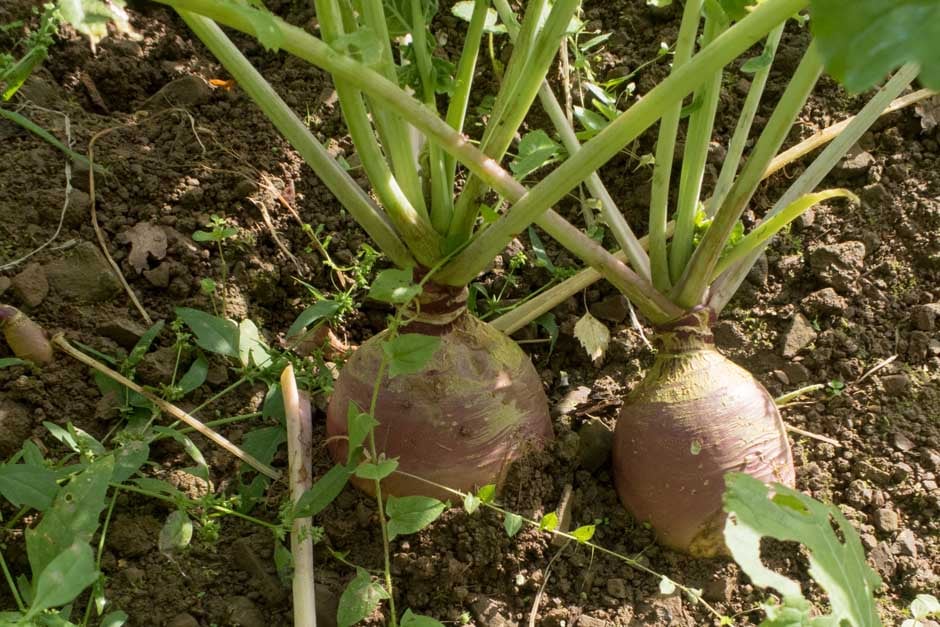
Keep swede and young plants free of weeds, to reduce competition for light, water and . Take care not to damage the top of the roots if around plants.
Protecting the crop
Swedes are members of the cabbage family, so are susceptible to various diseases and insects that typically affect brassicas. Disease-resistant varieties are available, and you can cover plants with insect-proof mesh. For more details on how to protect swedes, see Common problems, below.
Harvesting
Swedes are very versatile and can be harvested at whatever size you prefer – as baby veg after only a few weeks, as young roots about 5cm (2in) in diameter or, more usually, when 10–15cm (4–6in) across. They can also be left to grow slightly larger, as long as you choose a variety that doesn’t turn woody.
Swedes are usually ready to harvest from early autumn onwards, but you can leave them in the ground into winter. They’re particularly valued as a winter crop, when little else is available on the veg plot. Although swedes are hardy, it’s best to cover them with straw, cloches or plastic-free before winter. In cold regions or where soil sits wet over winter, lift the roots in late autumn and store them in containers of moist sand or peat-free potting in a frost-free shed or garage. See our guide to storing root veg.
Problem Solving
Swedes need plenty of water to grow well and shouldn’t be allowed to dry out, as the roots can split or turn bitter, and the leaves may develop . As swedes are brassicas, they’re susceptible to various diseases and insects that affect the cabbage family. Disease-resistant varieties are available, and you can cover the crop with insect-proof mesh. Young swede plants are also vulnerable to slugs and snails. For more on tackling these and other issues, see Common problems below.
Common Problems


Cabbage caterpillars
Cabbages and other brassicas are a food source for the caterpillars of several species of moth and butterfly.

Cabbage root fly
The maggots of cabbage root fly eat the roots of cabbages and other brassicas, they can also tunnel into the roots of swedes, turnips and radish.


