Getting Started
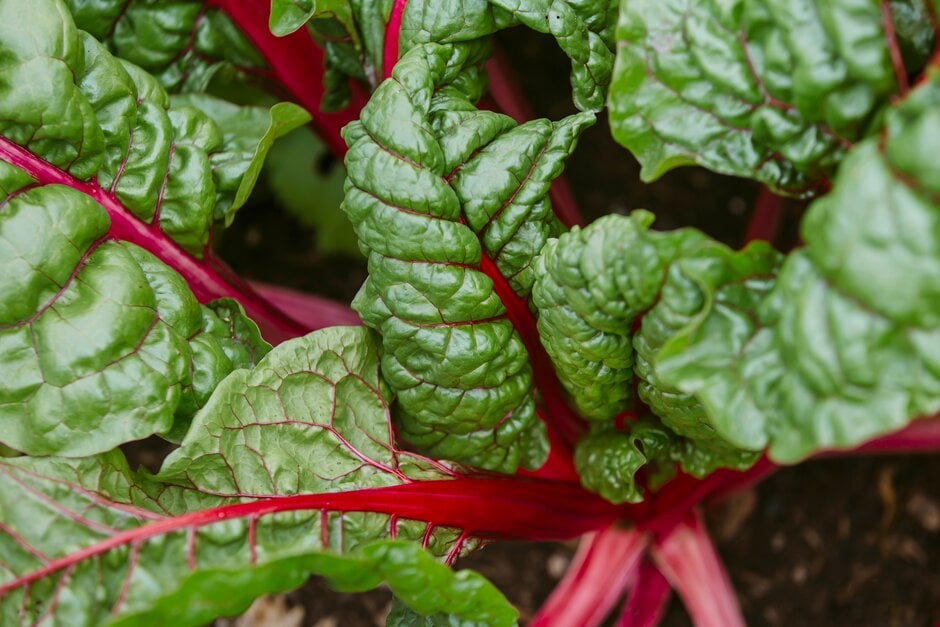
Chard – also known as Swiss chard, perpetual spinach or leaf beat – is a versatile, easy and productive leaf crop, closely related to beetroot. With large, lush foliage and bright stems in a choice of colours, chard makes an attractive crop in a veg plot or large container. In fact, it looks good enough to grow in flower borders. The nutritious leaves can be harvested over a long season – when young they can be eaten raw in salads, while larger leaves can be cooked like spinach.
Chard is easy to grow from seed. Sow outdoors in spring or early summer for repeated harvests through summer into autumn, then sow a second batch in mid-summer that will overwinter outdoors and provide early harvests the following spring. For baby leaves to use in salads, you can sow small batches regularly and harvest young leaves repeatedly.
Jobs to do now
Sow seed outdoors
Thin seedlings
Water in dry spells
Harvest
Month by Month
Sow
Plant Out
Harvest


Choosing What To Grow
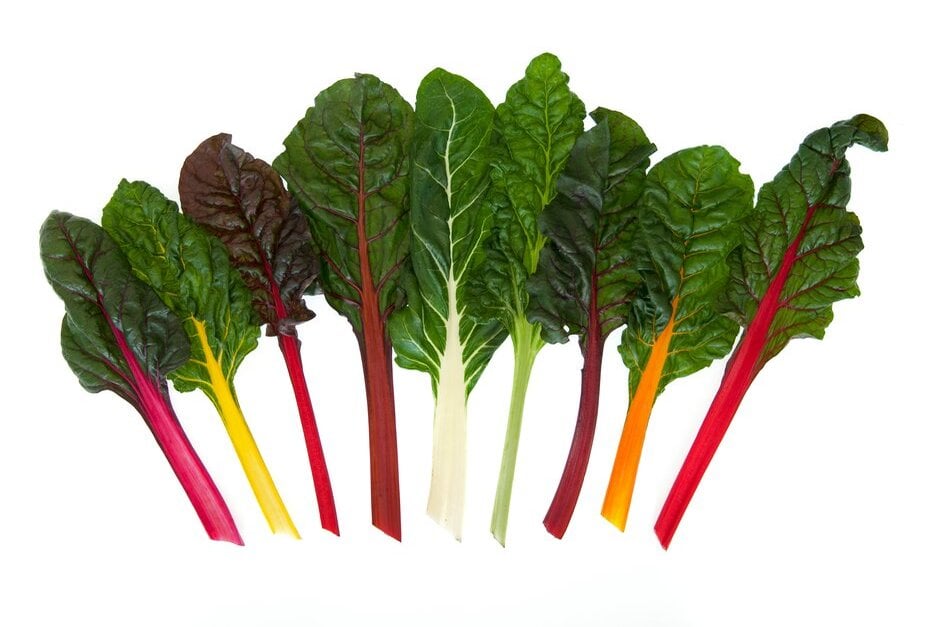
There are several varieties of chard, varying in colour rather than flavour, so choosing which to grow is primarily about looks. It’s the thick leaf stems, mid-ribs and veins that provide most of the colour, although the green leaves may also be blushed with red. Stem colours are mainly hot shades of ruby, crimson, pink, orange or yellow, or pure white. The best-known variety, ‘Bright Lights’, offers a rainbow of eye-catching hues, while other varieties are a single colour. White-stemmed varieties tend to be hardiest and most productive, so are a good choice in colder locations, although all chard is hardy.
For easy and reliable varieties, look for those with an RHS Award of Garden Merit (AGM), which shows they performed well in our trials – see ourlist of AGM fruit and veg (135kB pdf) and Recommended Varieties below. Also, for more veg-growing inspiration, visit the RHS gardens, which all grow a wide range of leafy crops such as chard.
What and where to buy
You can buy chard seeds in garden centres and from online suppliers. They may also sell young chard plants in in spring and early summer, ready for planting outdoors.
Recommended Varieties

'Rhubarb Chard' AGM
Very ornamental variety with bright red stalks and dark green, deeply puckered leaves with red veins.

'Bright Lights' AGM
Popular variety, produces a rainbow of red, yellow and orange stems and large glossy leaves with a mild, sweet flavour.

‘Charlotte’ AGM
Attractive dark green foliage with red veining and long, dark red stalks. Often known as rhubarb chard.


Preparing The Ground
Chard grows best in rich, moisture-retentive, free-draining soil. Prepare the ground ahead of sowing or planting by removing any weeds and forking in lots of home-made garden to improve drainage and enrich the soil. Alternatively, if you're practising no-dig, the soil ahead of sowing or planting directly into the mulch.
Sowing
Chard seeds are large and easy to sow. They can be sown outdoors from early spring to mid-summer, or can also be sown in indoors to produce an early crop.
Sowing indoors
For an early start, more reliable or to protect from slugs and snails, sow indoors from early spring onwards, into modular trays filled with peat-free . Sow one or two seeds per module (later to one if necessary), cover with 2.5cm (1in) of , then water well.
Once the young chard plants are well rooted and at least 5cm (2in) tall, transplant them outdoors – see Planting, below.
Sowing outdoors
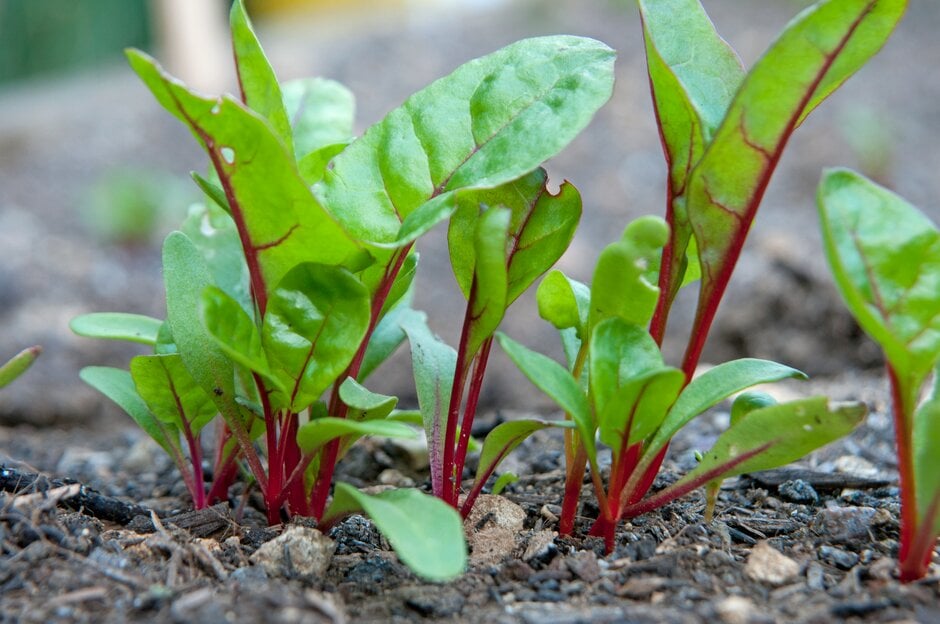
Sow chard seeds outdoors from April through to July. Choose a location in full sun, or with some light shade in summer. Make a 2.5cm (1in) deep into prepared soil, water along the base, then space the large seeds 10cm (4in) apart along its length. Cover with soil and water again if dry. Space any additional rows 45cm (18in) apart. Thin out the gradually to 30cm (1ft) apart, or 5cm (2in) apart for mini-leaves, and protect from slugs and snails, especially in damp weather.
Two sowings – one in April and the second in July – are usually sufficient. The July sowing provides leaves the following spring when growth resumes. Alternatively, for regular pickings of baby leaves for salads, sow small batches every few weeks from March to August. For more sowing tips, see our guides below.
Sowing outdoors in containers
Chard can be grown in large containers, at least 40cm (16in) wide and deep, filled with peat-free multi-purpose . Sow from April through to July, spacing the seeds 10cm (4in) apart, then cover with about 2.5cm (1in) of compost. Water thoroughly but gently to avoid dislodging the seeds. Place the container in a warm, sunny spot and water regularly. Thin out the to 30cm (1ft) apart, or 5cm (2in) apart for baby salad leaves. For more container-growing tips, see our guides below.
Planting
Young chard plants grown from seed indoors or bought as young plants in can be planted outside when at least 5cm (2in) tall. Gradually acclimatise them to outdoor conditions first by hardening off. Choose a sunny planting site, perhaps with light shade in summer, and prepare the ground in advance (see above).
Gently remove the young chard plants one at a time from their modular tray, without disturbing the roots, and plant them 30cm (1ft) apart, or 5cm (2in) apart for cut-and-come-again salad leaves. Water them in well and protect from slugs and snails.
Planting in a container is a similar process – choose a large container at least 40cm (16in) wide and deep, and fill with peat-free multi-purpose . Use the spacings given above, and keep the young plants well watered.
Plant Care
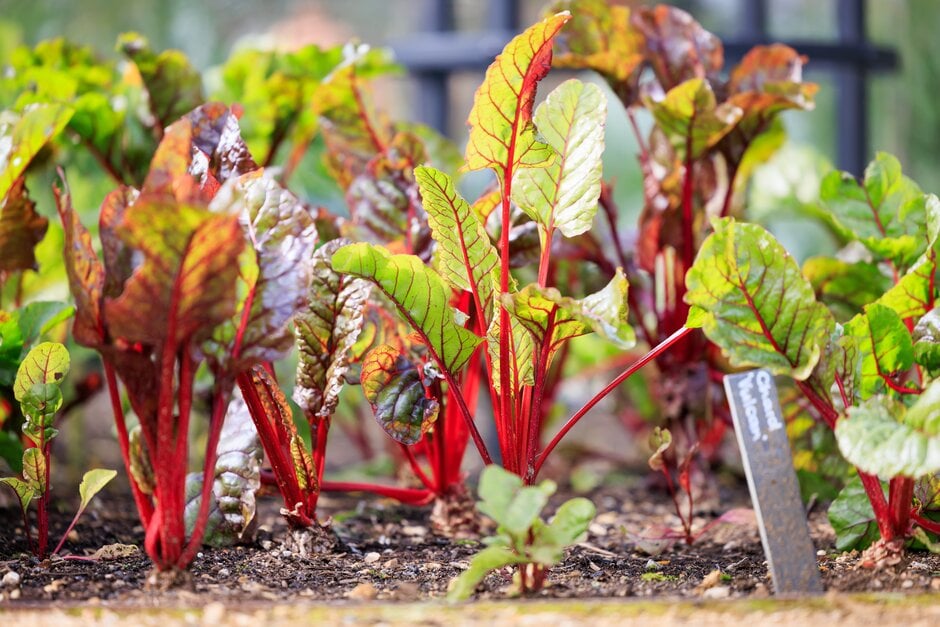
Once established, chard is a robust, leafy plant that needs little maintenance apart from weeding. Younger plants and those in containers need more regular attention.
Watering
Water young chard plants regularly until well established. More mature plants are fairly drought tolerant, but for the best crop of leaves, water during long dry spells. Plants in containers need regular watering throughout their growing period, as the limited amount of dries out quickly.
Mulching
To help hold moisture in the soil and suppress weeds, spread a thick layer of , such as garden , around chard plants once they are growing well. Leave a gap around the base of each plant, to ensure the stems don’t rot.
Mulching is not practical or necessary for chard grown as a cut-and-come-again salad crop.
Feeding
Chard doesn’t usually need feeding – it should grow well in most soils or in fresh potting .
Weeding
Weed regularly to reduce competition for water and – this is particularly important while plants are young, when weeds could easily overwhelm them. Dense weeds can also provide hiding places for slugs and snails, and reduce air circulation, which can encourage fungal diseases such as grey mould.
Bolting
In hot weather, chard plants may bolt (start to flower). Cut off any flower stems that start to form, and plants should continue to produce tasty leaves for a while longer. Flowering is inevitable though, and once it gets under way in earnest, chard plants will no longer be productive, so it’s usually time to remove and compost them.
If you don't need the space for another crop, you may prefer to leave chard in place as it can be very ornamental, especially those with coloured stems.
Winter protection
Chard is hardy, so will survive winter outdoors without protection, but will stop producing new leaves once temperatures drop. If you protect plants with cloches over winter, they may produce a few leaves in mild spells, and will sprout into growth faster in spring, providing valuable early pickings.
Plants growing in containers can be taken into a greenhouse over winter, and may give you some light harvests.
Harvesting
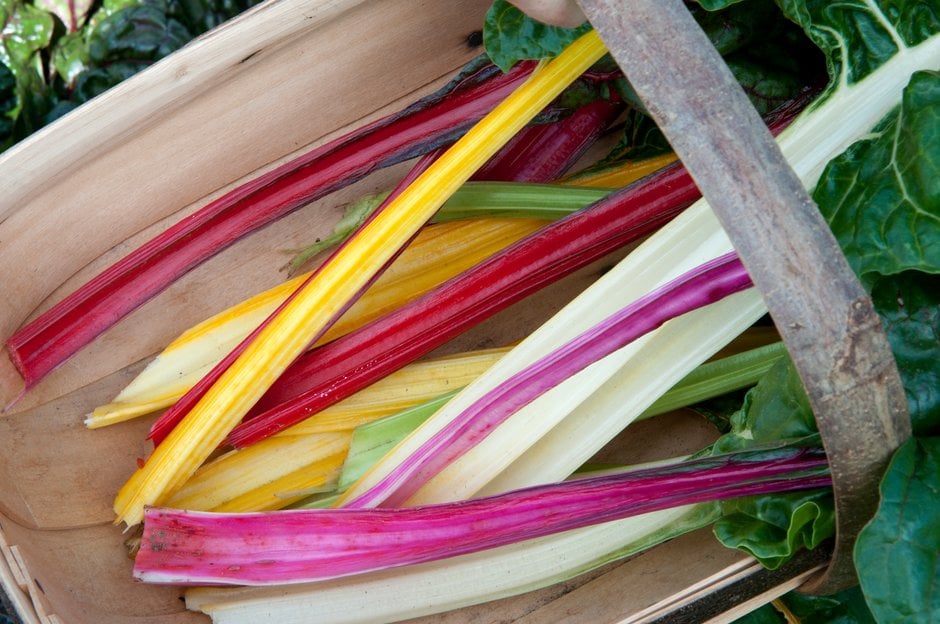
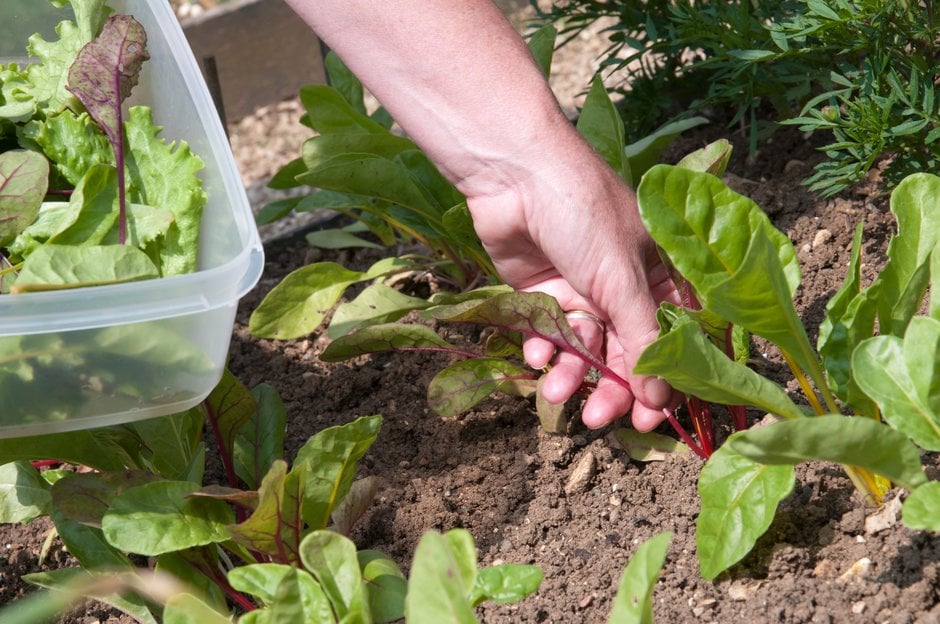
Chard plants provide pickings for several months, and if you sow in spring and again in mid-summer, you should have harvests for most of the year. The leaves can grow quite large, at least 30cm (1ft) tall, so a row of plants will give you plentiful harvests. Chard gives repeated or cut-and-come-again harvests, and regular picking encourages more leaves to form. You can either take just a few leaves from each plant or, with an established plant, cut all the leaves in one go:
- When taking a few leaves from each plant along the row, pick only the outer leaves, cutting them cleanly at the base of the stalk with secateurs or scissors. Keep several central leaves in place to grow and provide the next harvest a few weeks later. Take regular light pickings whenever plants have plenty of leaves
- You can take all the leaves from more (at least 20cm/8in tall) if you prefer, as they have a sturdy root that will resprout a new set of replacement leaves. Allow longer between pickings with this method, and cut the leaves at least 5cm (2in) above the base to ensure regrowth. Plants should provide several harvests across the season
Young chard leaves, up to about 5cm (2in) long, can be used raw in salads, adding a dash of colour. Larger leaves can be steamed like spinach or added to stir-fries, stews and pasta sauces. They reduce in volume during cooking, so be sure to pick enough. The thick stems have a crunchy celery-like texture when raw, or can be lightly steamed, taking slightly longer to cook than the leaves.
Problem Solving
Once established, chard plants are generally robust and produce a plentiful and reliable crop. However, you may need to protect from slugs and snails, especially in damp weather, and from birds. Leaf miners can cause cosmetic damage to foliage, but affected leaves can just be removed. In damp weather or overcrowded conditions, fungal diseases may affect the leaves, so space plants widely. For more on these and other issues, see Common problems, below.
Common Problems

Beet leaf miner
Beet leaf miner is a fly whose larvae tunnel inside the leaves of beetroot, spinach beet, Swiss chard and some other related plants creating large irr...

Downy mildews
Downy mildews can spoil the appearance of ornamental plants and affect the yield and quality of edible crops. Control depends on cultural techniques a...

Grey mould
Grey mould, caused by the fungus Botrytis cinerea, is a very common disease, causing a soft decay of plant tissues accompanied by a growth of fuzzy gr...

