RHS / Joanna Kossak

Appearance
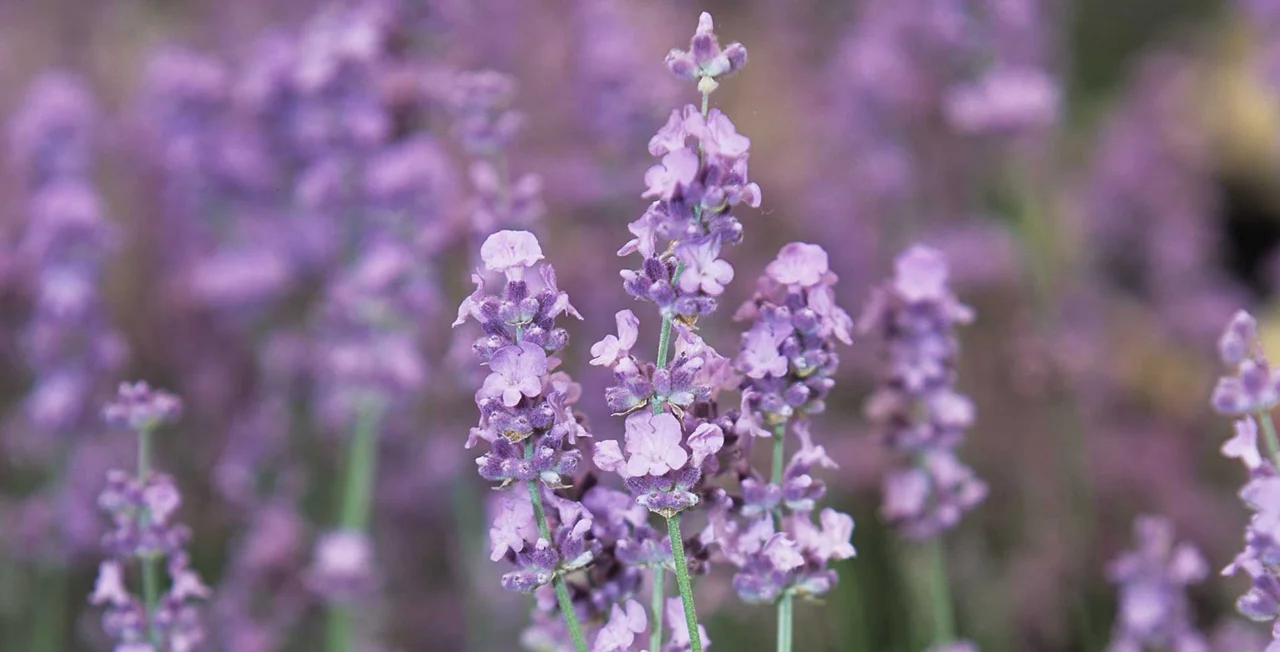
Caryopteris are generally compact shrubs, up to 1m (3ft), with upright or arching stems that carry fluffy clusters of blue-purple flowers in late summer and early autumn. Inflated seed pods continue the interest into autumn. They are deciduous, losing their usually grey-green, aromatic leaves over winter. A few cultivars offer variegated or golden leaves, or pink or white flowers.
Preferences
Caryopteris thrive in a warm, sunny location, and are happy in most types of soil, even quite poor, as long as it’s free draining. They cope well with drought.
Dislikes
They don’t like soggy ground and humidity. Winter waterlogging may prove fatal, so if you have heavy soil, grow in a raised bed or large container. Although hardy, caryopteris may struggle in very harsh winters, especially in damp soil, so plant a warm spot with good drainage.
Did you know?
Most of the widely available cultivars are from the hybrid Caryopteris x clandonensis, named after the village of Clandon in Surrey where it was bred in the 1930s. Its parents are thought to be C. incana and C. mongholica.
RHS Growing Guide
FREE
Read our comprehensive free RHS Growing Guide:
How to grow caryopteris
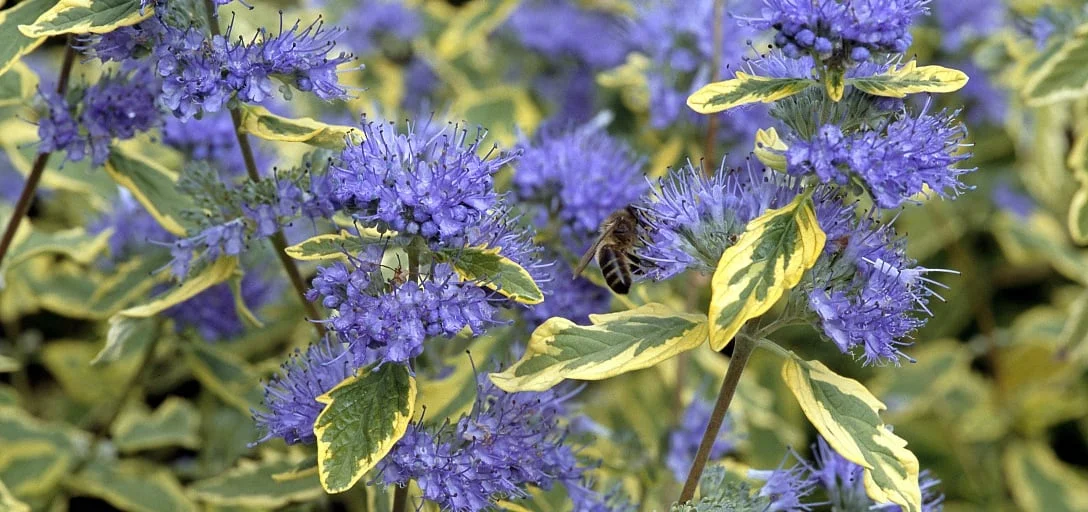

Introducing Caryopteris

Caryopteris × clandonensis 'Summer Sorbet'PBR (v)
bluebeard 'Summer Sorbet'
- Height
- 0.5–1 metres
- Width
- 0.5–1 metres

Caryopteris × clandonensis 'First Choice'
bluebeard 'First Choice'
- Height
- 0.5–1 metres
- Width
- 1–1.5 metres
![bluebeard [Hint of Gold]](/_image?href=https%3A%2F%2Fapps.rhs.org.uk%2Fplantselectorimages%2Fdetail%2Fblwa00516.jpg&)
Caryopteris × clandonensis Hint of Gold ('Lisaura'PBR)
bluebeard [Hint of Gold]
- Height
- 0.5–1 metres
- Width
- 0.5–1 metres

Caryopteris × clandonensis 'Worcester Gold'
bluebeard 'Worcester Gold'
- Height
- 0.5–1 metres
- Width
- 1–1.5 metres
![bluebeard [Sterling Silver]](/_image?href=https%3A%2F%2Fapps.rhs.org.uk%2Fplantselectorimages%2Fdetail%2FCaryopteris_clandonensis_Sterling_Silver_11_%28JW%29_60cm_8994.JPG&)
Caryopteris × clandonensis Sterling Silver ('Lissilv'PBR)
bluebeard [Sterling Silver]
- Height
- 0.5–1 metres
- Width
- 0.5–1 metres

Caryopteris × clandonensis 'Arthur Simmonds'
bluebeard 'Arthur Simmonds'
- Height
- 0.5–1 metres
- Width
- 1–1.5 metres
x of x
Showing
x to x
of x